
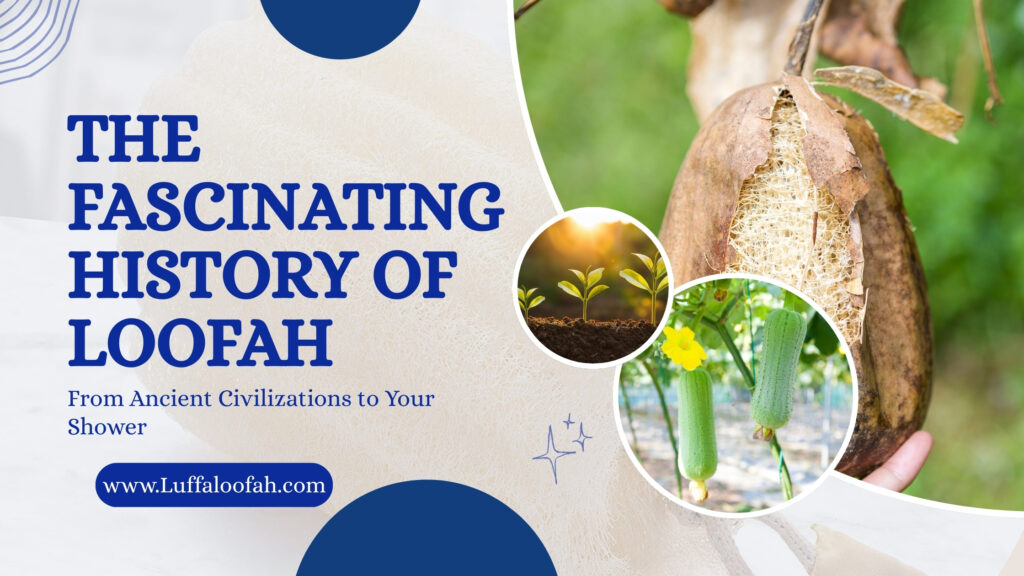
The Ancient Plant That Transformed Modern Bathing
The history of loofah stretches back over 5,000 years, making this humble plant one of the oldest natural cleaning tools still in active use today. Most people standing in their shower have no idea they are holding a piece of botanical heritage that once graced the bathhouses of Egyptian pharaohs and traveled ancient trade routes across three continents.
Understanding where loofah comes from matters whether you are a spa owner sourcing premium products for your business or a wellness enthusiast seeking the most sustainable bath accessories. The journey from ancient cultivation practices to modern manufacturing reveals why certain regions, particularly Egypt, continue producing the finest quality loofahs available anywhere in the world.
This comprehensive guide explores how loofah evolved from wild gourd to global commodity. You will learn about its origins in tropical Asia, its spread through ancient trade networks, and why Egyptian loofah has become the gold standard for quality. Retailers and distributors will discover what makes certain suppliers like Egexo stand apart with over 25 years of cultivation expertise. Individual consumers will understand why choosing natural loofah connects them to thousands of years of human bathing tradition.
By the end of this article, you will have the knowledge to make informed decisions about loofah products, whether you are placing a wholesale order or simply upgrading your personal skincare routine.
Ancient Origins: Where Did Loofah Come From
The Botanical Beginnings in Asia
The loofah plant, scientifically known as Luffa aegyptiaca and Luffa cylindrica, originated in the tropical regions of South and Southeast Asia. Archaeological evidence suggests cultivation began approximately 5,000 to 6,000 years ago in the Indian subcontinent. Ancient farmers initially grew loofah primarily as a food source, harvesting young fruits before they developed their characteristic fibrous interior.
The history of loofah as a cleaning tool emerged when early cultivators discovered that mature, dried fruits produced remarkably durable scrubbing material. This discovery transformed the plant from simple vegetable to multi-purpose agricultural product. The fibrous skeleton that develops as the fruit matures creates a naturally abrasive yet gentle texture perfect for cleaning skin and household surfaces.
Wild loofah species still grow throughout tropical Asia, Africa, and the Americas. However, the cultivated varieties that make their way into bath and body products today descend from selectively bred strains developed over millennia.
Early Trade Routes and Global Spread
Ancient trade networks carried loofah seeds westward along the Silk Road and maritime spice routes. Arab merchants introduced the plant to the Middle East and North Africa around 2000 BCE. The fertile Nile River valley proved exceptionally suited to loofah cultivation, and Egypt quickly became a center of production.
By 1500 BCE, loofah had established itself as a valuable trade commodity. Egyptian farmers perfected cultivation techniques that would influence growing practices for thousands of years. The unique combination of hot climate, nutrient-rich soil, and controlled irrigation along the Nile produced loofahs of exceptional quality and size.
European contact with loofah came later, likely through Portuguese explorers returning from Asia in the 15th century. The plant name itself reflects this multicultural history, with variations appearing in Arabic, Sanskrit, and various European languages.
Historical Timeline: Loofah Through the Ages
| Era | Region | Primary Use | Significance |
|---|---|---|---|
| 4000 BCE | South Asia | Food and medicine | First cultivation as edible gourd |
| 2000 BCE | Middle East | Food and cleaning | Introduction via trade routes |
| 1500 BCE | Egypt | Bath and beauty | Development of premium cultivation |
| 500 BCE | Mediterranean | Personal hygiene | Integration into Greek and Roman baths |
| 1400 CE | Europe | Luxury bath item | Portuguese introduce to Western markets |
| 1800 CE | Americas | Industrial and domestic | Commercial farming established |
| 1950 CE | Global | Mass market bath products | Synthetic alternatives emerge |
| 2000 CE | Worldwide | Eco-friendly resurgence | Sustainability drives demand increase |
This timeline illustrates how loofah evolved from regional crop to global commodity over six millennia.
Egyptian Loofah: Why the Nile Valley Produces the Best Quality
The Perfect Growing Conditions
Egypt has dominated premium loofah production for over 3,500 years, and the reasons are both geographical and cultural. The Nile River valley provides ideal conditions that no other region can fully replicate. Consistent sunshine exceeding 300 days annually ensures proper maturation. Mineral-rich alluvial soil delivers nutrients that strengthen fiber development. Controlled irrigation allows farmers to stress plants at precisely the right growth stage, producing denser, more durable fibers.
The Egyptian loofah industry represents generational knowledge passed from farmer to farmer. Families have cultivated loofah on the same land for centuries, developing intimate understanding of microclimate variations and harvest timing. This accumulated expertise explains why Egyptian suppliers like Egexo consistently deliver superior products that wholesale buyers and consumers recognize as distinctly better.
Modern Egyptian loofah farms combine traditional wisdom with contemporary agricultural science. Soil testing, drip irrigation, and selective breeding programs maintain quality standards while improving yields. The result is a product that honors its ancient heritage while meeting demanding modern specifications.
Quality Grades and Standards
Egyptian loofah typically grades into four main categories based on fiber density, uniformity, color, and structural integrity. Understanding these grades helps both wholesale purchasers and individual consumers select appropriate products for their needs.
| Grade | Fiber Density | Color | Best Applications | Typical Buyer |
|---|---|---|---|---|
| Premium A | Very High | Cream to Light Gold | Luxury spas and high-end retail | Boutique spa owners, premium brands |
| Grade A | High | Light to Medium Gold | Quality bath products | Retailers, wellness stores |
| Grade B | Medium | Medium Gold to Tan | Kitchen and household cleaning | Budget-conscious businesses, general consumers |
| Industrial | Variable | Varied | Manufacturing, crafts, filtration | Industrial buyers, craft suppliers |
For detailed specifications on each quality grade, review Egexo quality standards documentation. Wholesale buyers can request samples to evaluate grades before committing to bulk orders.
The Evolution of Loofah Uses Throughout History
Ancient Bath Culture and Personal Hygiene
The history of loofah intertwines deeply with the development of bathing culture itself. Ancient Egyptians used loofah in elaborate cleansing rituals that combined physical exfoliation with spiritual purification. Archaeological evidence from tombs dating to 1200 BCE shows loofah fragments alongside other bathing implements, indicating their importance in afterlife preparations.
Greek and Roman bathhouses incorporated loofah as standard equipment by 500 BCE. The famous Roman thermae employed loofah alongside olive oil and strigils for complete body cleansing. This combination exfoliated dead skin, removed dirt and grime, and left bathers with remarkably soft skin. Wealthy Romans imported Egyptian loofahs specifically for their superior quality.
Medieval Europe largely abandoned bathing culture, and loofah use declined accordingly. The Renaissance brought renewed interest in personal hygiene, and loofah returned to favor among aristocratic classes. By the 18th century, loofah had become associated with refined grooming practices throughout Europe and its colonies.
Kitchen and Household Applications
Beyond personal bathing, loofah has served household cleaning purposes for millennia. The same qualities that make loofah effective for skin exfoliation work equally well on cookware, surfaces, and delicate items requiring gentle scrubbing.
Ancient households used loofah to clean pottery, polish metals, and scrub wooden surfaces. The natural fibers clean effectively without scratching most materials. This versatility made loofah an essential domestic tool across multiple cultures and time periods.
Today, kitchen loofahs represent a growing market segment as consumers seek plastic-free alternatives to synthetic scrubbers. The same properties valued by ancient homemakers now appeal to environmentally conscious modern households. Kitchen loofahs typically use lower-grade fibers unsuitable for body care, making efficient use of the entire harvest.
Industrial and Specialty Uses
The history of loofah includes numerous industrial applications that continue today. During World War II, the United States military used loofah as filter material for diesel engines and steam equipment aboard naval vessels. The fibrous structure traps particles effectively while allowing liquid flow, making loofah surprisingly useful for filtration purposes.
Other historical industrial uses include padding for helmets and military equipment, insulation material, packing material for fragile goods, and soundproofing applications. Modern industries continue finding new applications for this versatile natural fiber.
Specialized contemporary uses include pet grooming products, spa accessories, craft materials, and biodegradable packaging components. For businesses exploring unique product lines, custom loofah product design services can help develop innovative applications that stand out in competitive markets.
Natural Loofah vs Synthetic Alternatives: A Historical Perspective
The Rise of Synthetic Sponges
The mid-20th century brought petroleum-based synthetic sponges to market, challenging natural loofah dominance for the first time in history. Polyester, nylon, and plastic mesh poufs offered lower prices and consistent manufacturing. By 1970, synthetic bath products had captured significant market share in Western countries.
However, growing environmental awareness has reversed this trend. Consumers increasingly recognize that plastic bath products contribute to microplastic pollution. A single synthetic shower pouf can release thousands of microplastic particles during its lifespan. These particles enter waterways, accumulate in marine ecosystems, and ultimately enter the food chain.
The history of loofah now includes its comeback story. Sales of natural loofah products have increased approximately 15 to 20 percent annually since 2018 as consumers prioritize sustainability. This growth has benefited both retail consumers seeking eco-friendly options and wholesale buyers serving environmentally conscious markets.
Comparison: Natural Loofah vs Synthetic Products
| Factor | Natural Loofah | Synthetic Sponge |
|---|---|---|
| Biodegradability | 100 percent compostable within weeks | Takes 200 plus years to decompose |
| Exfoliation Quality | Natural varied texture for effective scrubbing | Uniform texture, less effective |
| Environmental Impact | Carbon neutral, renewable resource | Petroleum based, contributes to pollution |
| Lifespan with Proper Care | 3 to 4 months | 1 to 2 months before harboring bacteria |
| Sustainability | Fully sustainable crop | Non-renewable resource |
| Skin Benefits | Naturally antimicrobial properties | May harbor more bacteria |
| Cost Over Time | Moderate initial, excellent value long-term | Low initial, higher replacement frequency |
| Manufacturing Carbon Footprint | Minimal | Significant |
This comparison demonstrates why both individual consumers and business buyers increasingly favor natural loofah products. For comprehensive guides on selecting quality loofahs, visit Loofah Guide for consumer-focused information.
Modern Loofah Industry: From Farm to Your Bathroom
Contemporary Cultivation Practices
Modern loofah farming maintains connections to ancient methods while incorporating agricultural advances. The growing cycle typically spans 150 to 200 days from planting to harvest. Farmers plant seeds in spring, train vines onto trellises or support structures, and harvest mature fruits in fall before first frost.
Egyptian farms continue leading global production, followed by significant cultivation in China, Vietnam, Guatemala, and Paraguay. Each region produces loofahs with slightly different characteristics based on local growing conditions. Egyptian loofah consistently earns recognition for superior fiber density and durability.
The farm to export process involves multiple stages: harvesting mature fruits, retting or soaking to soften outer skin, removing seeds and pulp, drying and curing fibers, grading by quality, cutting and shaping, packaging, and shipping. Quality suppliers like Egexo with over 25 years experience control each stage carefully to ensure consistent products reach customers worldwide.
Manufacturing and Processing Steps
| Step | Process | Duration | Quality Control Point |
|---|---|---|---|
| 1 | Harvest mature fruits at optimal ripeness | 1 to 2 weeks | Visual inspection for maturity |
| 2 | Retting in water to loosen outer skin | 3 to 7 days | Monitor water quality and timing |
| 3 | Peel and remove seeds and pulp | Same day as removal | Check for complete cleaning |
| 4 | Initial wash and rinse | 1 day | Ensure no residue remains |
| 5 | Sun dry or controlled drying | 3 to 5 days | Test moisture content |
| 6 | Grade by density, color, uniformity | 1 day | Multiple inspectors verify grades |
| 7 | Cut, shape, or process as needed | Variable | Dimension verification |
| 8 | Final quality inspection | 1 day | Comprehensive quality checklist |
| 9 | Packaging and labeling | 1 day | Verify packaging integrity |
| 10 | Ship to customers | Variable | Track chain of custody |
Understanding this process helps wholesale buyers evaluate potential suppliers. Download the complete Egexo product catalog for detailed specifications on available products and manufacturing standards.
Supplier Evaluation Checklist for Wholesale Buyers
Businesses sourcing loofah products should evaluate potential suppliers against multiple criteria. This checklist reflects best practices developed over centuries of loofah trade.
| Evaluation Criteria | What to Look For | Why It Matters |
|---|---|---|
| Cultivation Experience | Minimum 10 plus years, ideally 25 plus years | Ensures consistent quality and reliable supply |
| Geographic Source | Egyptian origin preferred for premium products | Superior growing conditions produce better fibers |
| Quality Grading System | Clear, documented grading standards | Ensures you receive expected quality consistently |
| Certifications | USDA Organic, Fair Trade, ISO standards | Verifies third-party quality validation |
| Sample Availability | Free or low-cost samples before bulk orders | Allows hands-on quality evaluation |
| MOQ Flexibility | Reasonable minimums for initial orders | Reduces risk for new business relationships |
| Custom Capabilities | Private labeling, custom sizing, product design | Supports brand differentiation |
| Communication | Responsive, clear communication in your language | Prevents misunderstandings and delays |
| Export Experience | Documentation expertise for your import country | Ensures smooth customs clearance |
| References | Verifiable current customer testimonials | Confirms reliability and satisfaction |
Buyers exploring wholesale partnerships can request a quotation to discuss specific requirements and evaluate supplier fit. For additional wholesale resources and industry information, visit Wholesale Loofah.
Caring for Your Loofah: Lessons from History
Why Proper Care Matters
Historical records indicate that ancient users understood the importance of loofah maintenance. Egyptian texts reference rinsing and drying practices that prevented spoilage and extended usable life. These principles remain relevant today.
A well-maintained natural loofah can last three to four months with proper care. Without attention, the same product might harbor bacteria within weeks. The porous fiber structure that makes loofah effective for exfoliation also creates an environment where moisture can accumulate if not dried properly.
Maintenance Best Practices
Following these care guidelines maximizes your loofah investment whether you purchased from a premium bath collection or sourced raw loofah scrubbers for personal processing.
| Action | Frequency | Purpose |
|---|---|---|
| Rinse thoroughly after each use | Every use | Removes soap residue and dead skin cells |
| Squeeze out excess water | Every use | Reduces moisture that promotes bacteria |
| Hang in well-ventilated area | After every use | Allows complete drying between uses |
| Move away from direct shower spray | Ongoing | Prevents constant re-wetting |
| Deep clean with diluted vinegar | Weekly | Disinfects and refreshes fibers |
| Microwave damp loofah for 30 seconds | Bi-weekly | Kills bacteria through heat |
| Inspect for dark spots or odors | Weekly | Early detection of deterioration |
| Replace when fibers break down | Every 3 to 4 months | Maintains hygiene and effectiveness |
These care practices honor the tradition of those who first recognized loofah as a valuable cleaning tool thousands of years ago.
The Future of Loofah: Sustainability and Innovation
Environmental Significance
The history of loofah is still being written as this ancient plant finds new relevance in contemporary sustainability efforts. Natural loofah represents a truly circular product: it grows from seeds, produces useful fiber, and returns to soil as compost after use. This lifecycle contrasts sharply with synthetic alternatives that persist in landfills and oceans for centuries.
Climate-conscious consumers increasingly seek products that align with environmental values. Loofah cultivation requires no synthetic fertilizers in organic operations, minimal water compared to many crops, sequesters carbon during growth, and provides income for agricultural communities. These factors make loofah an exemplary sustainable product.
Innovation in Products and Applications
Modern innovation builds on historical foundations. Private label loofah manufacturing allows brands to develop unique products while sourcing premium Egyptian materials. Innovations include compressed loofah discs that expand with water, loofah-based packaging replacing plastic foam, loofah composite materials for various applications, and loofah fiber reinforcement for biodegradable products.
Research continues into new applications for loofah fiber. Academic studies explore uses in water filtration, building materials, and biotechnology. The plant that ancient farmers first cultivated as food now stands at the frontier of sustainable material science.
FAQ Section
Q1: What is the history of loofah and where did it originate?
A: The history of loofah traces back approximately 5,000 to 6,000 years to tropical South and Southeast Asia, where the plant was first cultivated as an edible gourd. Ancient farmers discovered that mature, dried fruits produced excellent cleaning fibers. The plant spread westward through ancient trade routes, reaching Egypt around 2000 BCE where cultivation techniques were perfected along the Nile River valley.
Q2: Why is Egyptian loofah considered the best quality worldwide?
A: Egyptian loofah earns its premium reputation through ideal growing conditions including over 300 days of sunshine annually, mineral-rich Nile valley soil, and controlled irrigation practices. Additionally, Egyptian farmers have cultivated loofah for over 3,500 years, developing generational expertise in timing harvests and processing fibers for optimal density and durability. Suppliers like Egexo with 25 plus years of experience continue this tradition of excellence.
Q3: What is the minimum order quantity for wholesale loofah purchases?
A: Minimum order quantities vary by supplier and product type. Established suppliers typically offer MOQs ranging from 500 to 5,000 pieces depending on the specific item and customization requirements. Many quality suppliers like Egexo offer flexible minimums for initial orders to allow buyers to test products before larger commitments. Contact suppliers directly to discuss specific MOQ arrangements for your business needs.
Q4: How long does a natural loofah last compared to synthetic alternatives?
A: With proper care including thorough rinsing, complete drying between uses, and weekly disinfection, a quality natural loofah typically lasts 3 to 4 months. Synthetic poufs often require replacement every 1 to 2 months due to bacterial accumulation and fiber breakdown. While natural loofah may have slightly higher initial cost, the longer lifespan provides better value over time.
Q5: Is loofah really better for the environment than synthetic bath products?
A: Natural loofah offers significant environmental advantages over synthetic alternatives. Loofah is 100 percent biodegradable and composts within weeks after disposal. The plant grows as a renewable crop requiring minimal inputs in organic cultivation. Synthetic bath products are petroleum-based, take over 200 years to decompose, and release microplastics into waterways during use. For eco-conscious consumers and businesses targeting sustainability markets, natural loofah represents a clearly superior choice.
Q6: What certifications should I look for when sourcing wholesale loofah?
A: Important certifications for wholesale loofah include USDA Organic certification verifying chemical-free cultivation, ISO quality management certifications demonstrating consistent processes, and Fair Trade certification ensuring ethical labor practices. Additionally, look for documentation of quality grading standards and export compliance documentation appropriate for your import country. Reputable suppliers provide certification documentation upon request.
Q7: Can loofah be used for purposes beyond bathing?
A: Absolutely. Throughout its 5,000-year history, loofah has served numerous applications beyond personal bathing. Common uses include kitchen cleaning where loofah scrubs cookware without scratching, household surface cleaning, pet grooming products, industrial filtration, craft and art projects, and biodegradable packaging materials. The versatile fiber structure makes loofah suitable for any application requiring gentle yet effective scrubbing action.
Q8: How do I choose between different loofah grades for my business?
A: Grade selection depends on your target market and price positioning. Premium A grade suits luxury spas and high-end retail where customers expect exceptional quality and pay accordingly. Grade A works well for quality-focused bath product lines at moderate price points. Grade B serves budget-conscious markets and household cleaning applications effectively. Request samples of multiple grades to evaluate which best meets your specific product and customer requirements.
Expert Insight from Egexo
With over 25 years of experience cultivating and exporting premium Egyptian loofah, our team has witnessed remarkable consistency in what makes exceptional quality. The secret lies not just in Egyptian growing conditions but in harvest timing. A loofah harvested even one week too early lacks fiber density, while one left too long becomes overly brittle. Our multi-generational farming partners judge ripeness through subtle color changes and fiber texture that only experience can teach. For wholesale buyers, this expertise translates to products that outperform competitors on retail shelves. For individual consumers, it means a bath experience connecting you to 3,500 years of Egyptian cultivation mastery. Whether sourcing for business or personal use, insist on Egyptian origin and verify your supplier has the experience to deliver consistent quality every time.
Conclusion
The history of loofah reveals a remarkable journey spanning six millennia from ancient Asian cultivation to modern sustainable bathrooms worldwide. This natural fiber has cleansed Egyptian pharaohs, served Roman bathhouses, and now addresses contemporary environmental concerns as consumers seek plastic-free alternatives.
Egyptian loofah remains the gold standard for quality, benefiting from ideal Nile valley growing conditions and thousands of years of accumulated cultivation expertise. Whether you operate a spa sourcing premium products, run a retail business serving eco-conscious customers, or simply want the best natural exfoliation for your daily routine, understanding loofah history helps you appreciate the product in your hands.
Key Takeaways:
- Loofah originated 5,000 to 6,000 years ago in Asia and spread globally through ancient trade routes
- Egyptian loofah has dominated premium production for over 3,500 years due to superior growing conditions
- Natural loofah offers significant environmental advantages over synthetic alternatives
- Proper care extends loofah lifespan to 3 to 4 months with optimal performance
- Quality suppliers with extensive experience like Egexo ensure consistent premium products
Ready to experience Egyptian loofah quality?
- For Wholesale Buyers: Request a quote or download our complete product catalog
- For Individual Orders: Shop our collection or order samples