
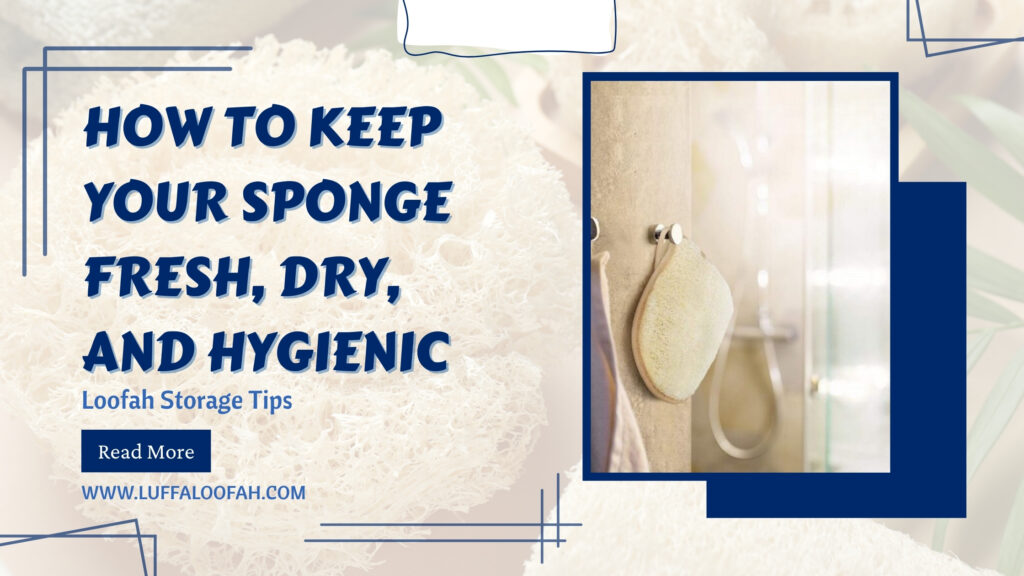
Why Proper Loofah Storage Matters More Than You Think
A single loofah sponge can harbor over 10 billion bacteria within just two weeks of improper storage, according to microbiology research published in the Journal of Clinical Microbiology. That statistic alone should change the way you think about what happens to your loofah after you step out of the shower. Knowing how to store loofah correctly is not a minor detail. It is the single biggest factor in how long your sponge lasts, how well it performs, and whether it remains safe against your skin.
This matters whether you are a consumer who wants to get the most from a natural bath sponge or a spa owner managing hundreds of loofahs across treatment rooms. For retailers and wholesale distributors, improper storage at the warehouse level can degrade inventory before it ever reaches a customer, leading to product returns, complaints, and damaged brand reputation. For individual users, a poorly stored loofah becomes a breeding ground for mold and bacteria, turning a hygiene tool into a health risk.
In this guide, you will learn step-by-step storage methods that extend loofah lifespan by up to 60 percent, discover what environmental conditions matter most, and understand how to evaluate loofah quality based on how well it holds up over time. We will also cover bulk storage best practices for businesses, seasonal care adjustments, and common myths that lead people to ruin their sponges faster than necessary. Whether you are stocking your bathroom or your stockroom, these tips apply to you.
If you are new to the world of natural loofahs, Loofah Guide offers a great starting point for understanding the different types available.
Understanding Your Loofah: What It Is and Why Storage Conditions Matter
The Natural Fiber Structure of Luffa
A natural loofah is the dried interior fiber network of the Luffa aegyptiaca gourd, a plant cultivated primarily in tropical and subtropical climates. Egyptian loofah, widely considered the gold standard in the industry, produces particularly dense and resilient fiber networks due to the Nile Delta growing conditions. Egexo, with over 25 years of loofah cultivation experience in Egypt, has documented that properly grown and processed Egyptian loofah fibers maintain structural integrity up to three times longer than lower-grade alternatives from other regions.
These plant-based fibers are naturally porous. That porosity is what makes a loofah effective at exfoliation and lather production. However, it also means that the sponge readily absorbs and retains moisture. When moisture sits in the fibers without adequate airflow, bacteria and mold colonies establish themselves rapidly, sometimes within 24 to 48 hours in warm, humid environments.
Why Synthetic and Natural Loofahs Behave Differently in Storage
Not all bath sponges respond to storage conditions the same way. Understanding the difference helps both consumers and wholesale buyers make better decisions about inventory management and personal care routines.
| Factor | Natural Egyptian Loofah | Synthetic Mesh Loofah |
|---|---|---|
| Fiber Type | Plant-based cellulose | Nylon or polyethylene |
| Moisture Absorption Rate | High, retains water deep in fibers | Low, surface moisture only |
| Drying Time (proper ventilation) | 4 to 6 hours | 1 to 2 hours |
| Bacterial Growth Risk if Stored Wet | High within 24 to 48 hours | Moderate within 48 to 72 hours |
| Recommended Replacement Cycle | Every 3 to 4 weeks | Every 6 to 8 weeks |
| Biodegradability | 100 percent biodegradable | Non-biodegradable, contributes to microplastics |
| Exfoliation Quality | Superior, consistent texture | Inconsistent, degrades quickly |
| Shelf Life (dry, unused) | 2 to 3 years if stored properly | 3 to 5 years |
Natural loofahs demand more attention when it comes to storage, but they deliver far better performance and sustainability in return. For businesses sourcing bath and body loofahs in bulk, understanding these properties is essential for setting proper warehouse protocols. For consumers, it explains why your natural loofah needs a bit more care than the plastic puff it replaced.
How to Store Loofah After Every Use: A Step-by-Step Guide
The single most important storage habit is what you do in the five minutes after your last use. Most loofah degradation and bacterial buildup happens because people leave their sponge sitting in the shower without a second thought. Here is the process that hygiene experts and dermatologists recommend.
Step 1: Rinse Thoroughly
After every use, hold your loofah under clean running water and squeeze it several times. You want to flush out all soap residue, dead skin cells, and any debris trapped in the fibers. Soap residue left in the sponge creates a film that traps moisture and provides nutrients for bacteria. Spend at least 15 to 20 seconds rinsing and wringing.
Step 2: Shake and Squeeze Out Excess Water
Once rinsed, shake the loofah vigorously three or four times and then compress it firmly to push out as much water as possible. Natural loofah fibers can hold water equal to several times their dry weight, so a single gentle squeeze is not enough. Repeat the squeeze-and-release motion at least three times.
Step 3: Hang in a Ventilated Area Outside the Shower
This is where most people make the critical mistake. Leaving your loofah on the shower floor, on a shelf inside the shower enclosure, or draped over the faucet keeps it in the most humid zone of your bathroom. Instead, hang it on a hook outside the shower area where air circulates freely. A well-ventilated spot near a window or a bathroom fan works best.
Step 4: Ensure It Dries Completely Between Uses
A natural loofah should be fully dry to the touch before you use it again. In a properly ventilated bathroom, this takes about 4 to 6 hours. If your bathroom lacks ventilation, consider moving the loofah to another room to dry. Some users keep a small hook on the back of their bedroom door or near a window in another part of the home.
This four-step process alone can extend loofah lifespan by 40 to 60 percent and dramatically reduce bacterial contamination.
For those interested in exploring different loofah types suited to various personal care needs, browse the full Egexo collection to see options ranging from gentle bath sponges to firm exfoliation scrubbers.
The Ideal Storage Environment: Temperature, Humidity, and Airflow
Bathroom Conditions That Destroy Loofahs Fastest
The average bathroom after a hot shower reaches humidity levels of 80 to 100 percent and temperatures between 70 and 85 degrees Fahrenheit. These are near-perfect conditions for microbial growth. Studies show that bacterial colonies double approximately every 20 minutes in warm, moist environments. Leaving a wet loofah in these conditions overnight is essentially giving bacteria an eight-hour head start.
Enclosed shower caddies, sealed containers, and plastic bags are the worst possible storage solutions for a wet or damp loofah. While they may look organized, they trap moisture against the fibers and create a microclimate that accelerates mold growth.
Optimal Storage Conditions for Daily Use
| Environmental Factor | Ideal Range | Unacceptable Range |
|---|---|---|
| Relative Humidity | Below 60 percent | Above 80 percent |
| Temperature | 65 to 75 degrees Fahrenheit | Above 85 degrees Fahrenheit |
| Airflow | Open, circulating air | Enclosed, stagnant air |
| Light Exposure | Indirect natural light | Direct prolonged sunlight (causes fiber brittleness) |
| Proximity to Water | At least 3 feet from shower spray zone | Inside shower enclosure |
Bulk Storage for Retailers, Spas, and Distributors
For businesses managing loofah inventory, storage conditions directly affect product quality and customer satisfaction. Wholesale buyers who source raw loofah scrubbers or finished bath products need climate-controlled storage to protect their investment.
Warehouse storage should maintain relative humidity below 50 percent and temperatures between 60 and 75 degrees Fahrenheit. Loofahs should be stored in breathable packaging, never in sealed plastic, and kept off the floor on pallets or shelving to allow air circulation underneath. Egexo ships all wholesale orders in ventilated packaging designed to preserve fiber integrity during transit, a detail that matters significantly when importing across different climate zones. You can learn more about how Egyptian loofah travels from harvest to your door through their farm to export process.
For spa owners rotating through loofah inventory, a first-in-first-out system prevents older stock from sitting too long. Even dry, unused natural loofahs can degrade if stored in damp back rooms or basements. Keeping a simple inventory log with received dates helps maintain consistent quality for clients.
Weekly and Monthly Maintenance That Complements Proper Storage
Knowing how to store loofah correctly is the foundation, but regular maintenance routines are the framework that keeps everything standing. Storage and cleaning work together. A well-stored but never sanitized loofah will still accumulate bacteria over time.
Weekly Sanitization Methods
Vinegar Soak Method: Submerge the loofah in a solution of one part white vinegar to two parts warm water for 15 to 20 minutes. Vinegar is mildly acidic and disrupts bacterial cell walls without damaging natural fibers. Rinse thoroughly after soaking and hang to dry completely.
Microwave Method (for natural loofahs only): Dampen the loofah, place it in the microwave, and heat on high for 20 to 30 seconds. The heat kills most surface bacteria. Allow it to cool before handling. This method is not suitable for synthetic sponges, which can melt.
Dilute Hydrogen Peroxide Soak: A solution of 3 percent hydrogen peroxide for 10 minutes provides effective sanitization. This is particularly popular in spa environments where multiple loofahs need cleaning simultaneously.
Monthly Deep Cleaning
Once a month, give your loofah a more thorough treatment. Soak it in a mixture of one tablespoon of baking soda dissolved in a quart of warm water for 30 minutes. This neutralizes odors, dissolves built-up soap residue, and refreshes the fiber texture. After soaking, rinse under running water and allow it to dry in direct sunlight for 2 to 3 hours. The UV exposure provides additional antibacterial benefit without the brittleness that comes from prolonged daily sun exposure.
Maintenance Schedule at a Glance
| Task | Frequency | Time Required | Benefit |
|---|---|---|---|
| Rinse and hang dry | After every use | 2 minutes | Prevents 80 percent of bacterial buildup |
| Vinegar or peroxide soak | Once per week | 20 minutes | Kills established bacteria colonies |
| Baking soda deep clean | Once per month | 35 minutes | Removes residue, restores texture |
| UV sunlight exposure | Once per month | 2 to 3 hours | Natural disinfection, odor removal |
| Full replacement | Every 3 to 4 weeks | N/A | Ensures optimal hygiene and performance |
Businesses offering loofah products to customers, whether through retail shelves or spa treatment menus, can use this schedule as customer education material. Including a simple care card with each purchase reduces complaint rates and increases repeat business. If you are considering private label loofah products, branded care instructions on packaging add perceived value at minimal cost.
Common Loofah Storage Mistakes and How to Fix Them
Even people who care about hygiene make storage errors without realizing it. Here are the most common mistakes, why they are harmful, and the simple fixes.
Mistake 1: Storing the Loofah in the Shower Permanently
The shower enclosure is the most humid spot in any home. Keeping your loofah there 24 hours a day means it never fully dries. The fix is straightforward. Move it outside the shower after use. A suction cup hook on the bathroom mirror or a wall-mounted hook near the bathroom vent works well.
Mistake 2: Using a Sealed Container for Travel
Travelers often toss a damp loofah into a plastic bag or sealed toiletry case. After even one day, the loofah will develop a musty smell and may begin to show mold spots. For travel, let the loofah dry completely before packing it. If that is not possible, use a mesh bag that allows airflow, and unpack it immediately upon arrival.
Mistake 3: Sharing Loofahs Without Proper Sanitization
In households and especially in spa settings, sharing a loofah without sanitizing it between users transfers bacteria, dead skin cells, and potentially fungal organisms. Each person should have their own loofah. For spas and wellness businesses, single-use or per-client loofah allocation is the professional standard. Ordering bath and body loofahs in bulk makes per-client use economically viable.
Mistake 4: Ignoring Signs of Degradation
A loofah that smells musty, feels slimy, shows discoloration, or has started to break apart has reached the end of its safe lifespan. No amount of cleaning will fully restore it. Replace it. For consumers, this typically means swapping every 3 to 4 weeks. For businesses tracking inventory, conducting visual quality checks on stored products every 30 days prevents degraded stock from reaching customers.
Mistake 5: Storing Bulk Inventory in Non-Climate-Controlled Spaces
Wholesale buyers sometimes store loofah shipments in garages, shipping containers, or non-insulated storage units. Temperature swings and humidity fluctuations cause fiber expansion and contraction that weakens the sponge structure over time. Climate-controlled, dry storage is essential. Egexo maintains strict quality standards from harvest through delivery, but those standards only hold if the buyer continues proper storage practices after receiving the shipment.
How to Store Loofah Products for Different Use Cases
Natural loofahs are not just for the shower. They appear in kitchens, pet grooming, crafts, and professional spa treatments. Each use case has its own storage considerations.
Kitchen Loofahs
Kitchen loofahs face different contaminants than bath sponges, including food particles, grease, and kitchen bacteria like salmonella and E. coli. After each use, rinse the kitchen loofah thoroughly with hot water and a drop of dish soap. Wring it out and place it upright in a dish rack or hang it from a small hook near the sink. Never leave it sitting in the sink basin where standing water collects. Kitchen loofahs should be sanitized twice per week and replaced every 2 to 3 weeks due to heavier contamination exposure.
Pet and Spa Grooming Loofahs
Loofahs used for pet grooming pick up animal hair, dander, and outdoor bacteria. After grooming, rinse the loofah under warm running water, remove visible hair and debris, and hang to dry in a well-ventilated area away from the pet’s living space. For professional grooming salons, a dedicated drying rack near an air vent or fan is ideal. Explore the range of pet and spa grooming loofahs designed for durability in these demanding applications.
Decorative and Craft Loofahs
Some consumers and retailers use dried loofah in soap making, home decor, and craft projects. These loofahs should be stored in a cool, dry location away from direct sunlight. A linen closet, craft storage bin with ventilation holes, or a dry pantry shelf works well. Since these loofahs are not exposed to water during regular use, they can last for years if kept in stable conditions.
Bulk Inventory for Retail and Distribution
| Storage Parameter | Recommended Practice | Risk If Ignored |
|---|---|---|
| Packaging Type | Breathable paper or mesh | Mold development in sealed plastic |
| Shelf Position | Middle to upper shelves | Moisture damage on floor-level storage |
| Rotation System | First-in, first-out | Degraded older stock shipped to customers |
| Inspection Frequency | Every 30 days | Undetected quality loss |
| Climate Control | 60 to 75 degrees F, below 50 percent humidity | Fiber weakening, discoloration |
| Documentation | Batch dates, origin, grade recorded | Inability to trace quality issues |
Businesses looking to build or expand their loofah product line can request a custom product design consultation with Egexo to develop products tailored to specific storage and usage environments.
Evaluating Loofah Quality Through Storage Performance
One of the best ways to judge the quality of a loofah, whether you are a consumer evaluating a purchase or a buyer assessing a new supplier, is to observe how the sponge performs under proper storage conditions over time.
Quality Indicators After 2 Weeks of Proper Storage and Use
A high-grade Egyptian loofah stored and maintained correctly should show minimal fiber shedding after two weeks. It should bounce back to its original shape after squeezing, maintain a neutral or mildly earthy scent, and still produce rich lather. If the loofah becomes limp, develops an odor despite proper care, or sheds fibers excessively within the first two weeks, the quality grade is likely low.
Quality Grading Reference
| Quality Grade | Fiber Density | Shape Retention After 2 Weeks | Expected Lifespan (with proper storage) | Typical Source |
|---|---|---|---|---|
| Premium A | Very high, tight weave | 95 percent or above | 4 to 6 weeks | Egyptian Nile Delta |
| Standard B | Moderate, even weave | 80 to 90 percent | 3 to 4 weeks | Various subtropical regions |
| Economy C | Low, loose weave | 60 to 75 percent | 2 to 3 weeks | Mass-produced, mixed origin |
Egexo sources exclusively from the Nile Delta region and grades every batch according to fiber density, color consistency, and structural integrity. Wholesale buyers can request loofah samples to evaluate quality firsthand before committing to a bulk order. For a complete overview of available products, sizes, and grades, download the Egexo product catalog.
For more wholesale purchasing guidance and supplier comparison tools, Wholesale Loofah is a dedicated resource for business buyers.
Expert Insight from Egexo
With over 25 years of hands-on experience cultivating, processing, and exporting natural Egyptian loofah, the Egexo team has seen firsthand how storage practices determine product outcomes. One of the most overlooked factors in loofah longevity is the initial drying and curing process during manufacturing. A loofah that has been properly sun-dried and cured to a moisture content below 12 percent before packaging will always outperform one that was rushed through processing. This is why origin and supplier quality matter as much as your personal storage habits. When you start with a properly processed loofah, your daily care routine simply maintains the quality that was built in from day one. Egyptian loofah from the Nile Delta, when processed correctly, sets the standard for durability, texture, and shelf stability that no other region consistently matches. If you are a buyer evaluating suppliers, always ask about moisture content at packaging. It tells you more about long-term quality than almost any other metric.
Frequently Asked Questions
Q1: How should I store my loofah to prevent mold and bacteria?
The most effective way to store a loofah is to rinse it thoroughly after each use, wring out excess water, and hang it on a hook in a well-ventilated area outside the shower. Avoid sealed containers, enclosed shower caddies, or any spot where air does not circulate. The goal is for the loofah to dry completely between uses, which takes 4 to 6 hours in a ventilated bathroom. This simple practice prevents the vast majority of mold and bacterial contamination.
Q2: How often should I replace my natural loofah sponge?
Dermatologists and hygiene experts recommend replacing a natural loofah every 3 to 4 weeks with regular use. Even with perfect storage and weekly sanitization, the porous fiber structure accumulates bacteria over time that cleaning cannot fully remove. Premium-grade Egyptian loofahs from suppliers like Egexo may last closer to the 4 to 6 week mark due to denser fiber construction, but replacement within a month is the safe standard.
Q3: Can I store loofahs in bulk for my spa or retail business?
Yes, but bulk storage requires climate-controlled conditions. Keep loofahs in breathable packaging at temperatures between 60 and 75 degrees Fahrenheit and relative humidity below 50 percent. Store them on shelves or pallets rather than directly on the floor, and use a first-in-first-out rotation system. Inspect inventory every 30 days for signs of moisture damage or discoloration. For reliable bulk supply, request a wholesale quote from Egexo.
Q4: Is it safe to store a loofah in a plastic bag when traveling?
A sealed plastic bag is not recommended for a damp loofah. If you must pack one for travel, let it dry completely first. If time does not allow full drying, use a mesh bag that permits airflow and unpack the loofah immediately upon arrival. A damp loofah sealed in plastic can begin developing mold within 12 to 24 hours.
Q5: What is the difference between storing natural and synthetic loofahs?
Natural loofahs absorb significantly more moisture and take longer to dry, making proper ventilation critical. Synthetic loofahs dry faster but still require hanging in an open-air space. Both types should never be stored in enclosed, humid environments. However, natural loofahs offer superior exfoliation, full biodegradability, and a more sustainable lifecycle, making the extra care effort worthwhile.
Q6: How do I know if my loofah has gone bad from improper storage?
Signs of a degraded loofah include a persistent musty or sour odor even after washing, visible dark spots or discoloration, a slimy texture, excessive fiber shedding, or a loss of firmness and shape. If you notice any of these signs, replace the loofah immediately. No amount of sanitization will restore a loofah that has reached this stage.
Q7: Does the quality of the loofah affect how well it stores?
Absolutely. Higher-grade loofahs with denser, tighter fiber networks resist moisture retention and bacterial penetration better than low-grade sponges. Premium Egyptian loofah, particularly from the Nile Delta region, is recognized as the best performing natural loofah for durability and storage resilience. Egexo, the leading Egyptian loofah supplier, grades all products according to strict quality standards that directly impact shelf life and performance.
Conclusion
Learning how to store loofah properly is one of the simplest and most impactful steps you can take to protect your skin, extend your sponge lifespan, and get genuine value from a natural product. The principles are universal whether you are managing a single bathroom loofah or a warehouse full of wholesale inventory. Rinse thoroughly, wring completely, hang in ventilated air, and keep the environment dry. Combine proper storage with weekly sanitization and timely replacement, and your loofah will perform safely and effectively for its full natural lifespan.
For businesses, proper storage practices protect inventory quality, reduce waste, and ensure customers receive the premium product they expect. For consumers, a few extra seconds of daily care translate to weeks of better performance and healthier skin.
Key Takeaways:
- Always hang your loofah outside the shower in a ventilated area and let it dry completely between uses
- Sanitize weekly with vinegar, hydrogen peroxide, or brief microwave treatment to eliminate bacteria
- Replace natural loofahs every 3 to 4 weeks regardless of appearance, as internal bacterial buildup is invisible
- Store bulk inventory in climate-controlled spaces below 50 percent humidity with breathable packaging
- Start with a high-quality Egyptian loofah for the best storage resilience and longest usable lifespan
Ready to experience Egyptian loofah quality?
- For Wholesale Buyers: Request a quote or download the complete product catalog
- For Individual Orders: Shop the full collection or order samples