
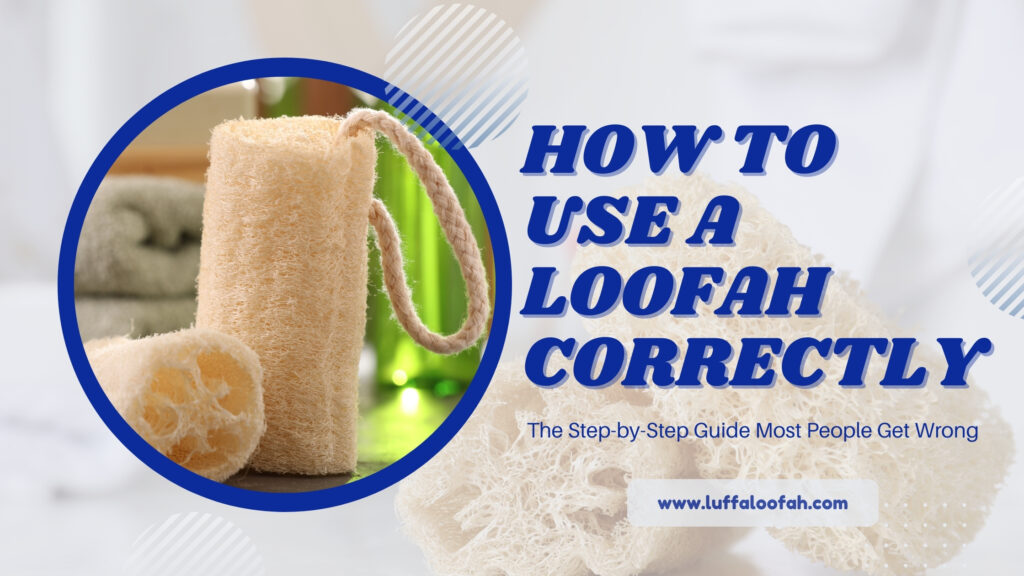
Here is a fact that might surprise you. According to dermatological studies, roughly 70 percent of loofah users make at least one critical mistake that turns their beloved sponge into a breeding ground for bacteria. The problem is not the loofah itself. The problem is that almost nobody learns how to use a loofah the right way before stepping into the shower.
Whether you are a consumer who just picked up your first natural Egyptian loofah or a spa owner stocking dozens of premium bath products for your clients, understanding proper loofah technique is not optional. It is essential. Bad habits lead to skin irritation, shortened product lifespan, and wasted money. Good habits lead to glowing skin, longer-lasting products, and happier customers.
This guide covers everything you need to know. You will learn the correct step-by-step loofah technique that dermatologists actually recommend, discover the mistakes that ruin both your skin and your loofah, and find out why the quality of your loofah matters just as much as how you use it. Retailers and spa professionals will also find critical insights about selecting the right grade of loofah to recommend and resell, because educated customers are repeat customers.
Egyptian luffa, cultivated in the Nile Delta region, has been used for centuries as a natural exfoliation tool. Today, it remains the gold standard for both individual wellness routines and commercial bath product lines worldwide.
Let us fix the way you loofah, once and for all.
Why Most People Get Their Loofah Technique Wrong
The loofah seems simple. Pick it up, add soap, scrub your body. Done, right? Not even close. Most people skip preparation steps, use far too much pressure, and store their loofah in the worst possible environment afterward. These small errors compound over time and create real problems.
The Three Most Common Mistakes
The first mistake is using a dry loofah directly on skin. A natural loofah is firm when dry, and scrubbing with it in that state can cause micro-tears on the surface of your skin. The second mistake is applying excessive pressure. Many users believe that harder scrubbing equals deeper cleaning, but aggressive loofah technique actually strips away protective oils and damages the skin barrier. The third mistake is leaving a wet loofah in a warm, dark shower corner where mold and bacteria thrive.
A 2023 study published in the Journal of Clinical Microbiology found that improperly stored bath sponges can harbor over 10 billion bacteria per square inch within just two weeks of use. That statistic alone should motivate anyone to rethink their routine.
Why Quality Matters Before Technique
Even perfect loofah technique cannot save a low-quality product. Thin, poorly processed loofahs fall apart quickly and do not exfoliate evenly. This matters for consumers choosing their next bath product and for business buyers selecting inventory. Premium Egyptian loofahs from established suppliers like Egexo, with over 25 years of loofah cultivation experience, deliver a consistent fiber density that responds well to proper use. When the raw material is right, the results speak for themselves.
How to Use a Loofah Correctly: The Complete Step-by-Step Guide
This is the section you came for. Follow these steps exactly, and you will get better exfoliation, cleaner skin, and a loofah that lasts significantly longer. This loofah technique works for natural luffa sponges used in personal showers, spa treatment rooms, and retail demonstration settings alike.
Step 1: Soak Your Loofah Before Every Use
Hold your natural loofah under warm running water for 30 to 60 seconds before applying any soap. This softens the plant fibers and makes the texture gentler on your skin. Warm water also opens the pores in the loofah structure, helping it absorb and lather soap more effectively.
For spa owners and hospitality businesses, pre-soaking loofahs before presenting them to clients is a non-negotiable quality step. It demonstrates professionalism and prevents any discomfort during the treatment. Stocking high-quality bath and body loofahs that soften consistently is essential for client satisfaction.
Step 2: Apply Your Cleanser to the Loofah, Not Your Skin
Squeeze a small amount of body wash or rub a bar of soap directly onto the soaked loofah. Work it into the fibers with your hands until a rich lather forms. Applying cleanser to the loofah rather than your skin ensures even distribution and prevents product waste.
A well-made natural loofah generates three to four times more lather than a synthetic puff with the same amount of soap. This is one reason why natural loofahs are more cost-effective over time for both individuals and commercial operations.
Step 3: Use Gentle, Circular Motions
Begin at your shoulders and work your way down using light, circular strokes. The correct loofah technique requires only gentle pressure. Let the texture of the fibers do the work. You should feel a mild, pleasant friction, never pain or raw stinging.
Focus on areas prone to dryness and buildup like elbows, knees, and heels. Use even lighter pressure on sensitive areas such as the chest, inner arms, and neck. Never use a body loofah on your face unless it is specifically designed for facial exfoliation.
Step 4: Rinse Your Body and the Loofah Thoroughly
After scrubbing, rinse your skin completely with clean water. Then hold your loofah under running water and squeeze it several times to flush out all soap residue. Leftover soap trapped in the fibers accelerates bacterial growth and breaks down the plant material faster.
Step 5: Dry and Store Your Loofah Properly
This step is where most people fail. Shake excess water from your loofah and hang it in a well-ventilated area outside the shower. Ideally, place it near a window or in a dry room where air circulates freely. Never leave it sitting on a wet shower shelf or sealed in a plastic bag.
Proper drying between uses can extend the life of a natural loofah by 40 to 60 percent. For businesses that go through large quantities, this translates into meaningful cost savings and better return on wholesale purchases.
Step-by-Step Loofah Technique Summary
| Step | Action | Duration | Key Detail |
|---|---|---|---|
| 1 | Soak loofah in warm water | 30 to 60 seconds | Softens fibers and opens pores |
| 2 | Apply cleanser to loofah | 10 to 15 seconds | Work into lather before touching skin |
| 3 | Scrub in circular motions | 3 to 5 minutes | Light pressure, start from shoulders down |
| 4 | Rinse body and loofah | 1 to 2 minutes | Squeeze loofah to remove all soap |
| 5 | Dry and store in open air | Ongoing between uses | Hang in ventilated space, never in shower |
Natural vs. Synthetic Loofahs: Why Your Loofah Technique Depends on What You Use
Not all loofahs are the same, and how to use a loofah correctly depends partly on whether you are using a natural or synthetic product. The differences affect exfoliation quality, hygiene, environmental impact, and business viability.
Comparison at a Glance
| Factor | Natural Egyptian Loofah | Synthetic Loofah Puff |
|---|---|---|
| Material | Dried luffa gourd fiber | Nylon or polyester mesh |
| Exfoliation Level | Medium to firm, even texture | Soft, inconsistent |
| Lather Production | Excellent, 3 to 4 times more | Moderate |
| Average Lifespan | 3 to 4 weeks with proper care | 4 to 6 weeks |
| Biodegradable | Yes, 100 percent compostable | No, contributes to plastic waste |
| Bacteria Resistance | Moderate, needs proper drying | Low, traps moisture in folds |
| Eco-Friendly | Yes | No |
| Ideal For | Deep exfoliation, spa use, eco-conscious buyers | Light daily washing |
| Wholesale Demand Trend | Growing, up 18 percent year over year | Declining in premium markets |
Natural Egyptian loofah, particularly loofah sourced from the Nile Delta and processed by experienced cultivators like Egexo, consistently outperforms synthetic alternatives in exfoliation quality and sustainability metrics. For retailers building an eco-friendly product line, this distinction is a significant selling point.
For consumers seeking a greener bathroom routine, switching from synthetic puffs to natural luffa sponges eliminates one source of microplastic pollution entirely. You can explore a wide range of natural options in the Egexo shop.
How Often Should You Replace Your Loofah and How to Know When It Is Time
Even with perfect loofah technique, every natural loofah has a finite lifespan. Knowing when to replace yours protects your skin and ensures you always get effective exfoliation.
Replacement Timeline
Dermatologists generally recommend replacing a natural loofah every three to four weeks. If you use it daily, lean toward the three-week mark. If you use it two to three times per week and dry it properly, you may safely stretch it to four weeks.
Signs Your Loofah Needs Replacing
Watch for these indicators. If the loofah develops a musty or sour smell even after drying, it is time. If the fibers start breaking apart or feel slimy after soaking, discard it immediately. If the color changes significantly, especially toward dark spots, mold may be present.
The Weekly Deep Clean Method
Between replacements, sanitize your loofah once a week. Soak it in a solution of one part white vinegar to two parts warm water for 15 to 20 minutes. Alternatively, microwave a damp loofah for 30 seconds to kill surface bacteria. Rinse thoroughly and allow it to air dry completely.
Loofah Maintenance Checklist
| Task | Frequency | Purpose |
|---|---|---|
| Rinse thoroughly after use | Every use | Removes soap and dead skin cells |
| Hang to dry in ventilated area | Every use | Prevents bacterial growth |
| Deep clean with vinegar soak | Weekly | Kills bacteria and removes odor |
| Inspect for fiber breakdown | Weekly | Identifies when replacement is needed |
| Replace loofah entirely | Every 3 to 4 weeks | Ensures hygiene and effective exfoliation |
| Compost used natural loofah | At replacement | Eco-friendly disposal |
For spa businesses and retailers, understanding these maintenance cycles helps with inventory planning. A spa that serves 50 clients per week and uses individual loofahs will need a steady, reliable supply. Working with a wholesale supplier that offers consistent quality and flexible minimum order quantities keeps operations running smoothly without overstock waste.
Choosing the Right Loofah for Your Skin Type and Needs
How to use a loofah correctly also depends on choosing the right loofah in the first place. Different skin types respond better to different fiber densities and loofah formats.
Loofah Selection by Skin Type
Sensitive skin benefits from softer, younger luffa gourds that have been processed to reduce coarseness. Normal skin does well with standard-density bath loofahs that provide moderate exfoliation. Dry or rough skin, particularly on heels, elbows, and knees, responds best to denser, firmer raw loofah scrubbers that remove buildup effectively.
For business buyers, offering a range of densities allows you to serve a broader customer base. A retailer who stocks only one type of loofah misses sales from customers who need something softer or firmer. Egexo offers custom product design services that allow brands to create loofahs tailored to specific market segments.
Beyond the Bathroom: Other Uses for Natural Loofahs
Natural luffa is not limited to body care. Its fibrous structure makes it effective for household cleaning, kitchen scrubbing, and even pet grooming. Kitchen loofahs cut from the same plant work beautifully on dishes and countertops without scratching surfaces. Pet and spa grooming loofahs offer gentle cleaning for animals with sensitive skin.
This versatility creates opportunities for retailers and distributors to expand their product lines using a single raw material from a single trusted source. Businesses interested in building a branded loofah line can explore private label manufacturing options to create products under their own label.
What Makes Egyptian Loofah the Best Choice for Consumers and Businesses
Not all loofah is grown equal. Climate, soil, water quality, and harvesting methods all affect the final product. Egyptian loofah, grown in the fertile Nile Delta region, has earned its reputation as the best loofah available on the global market, and for good reason.
The Egyptian Advantage
Egypt produces some of the densest, most uniformly fibered luffa gourds in the world. The combination of mineral-rich soil, consistent sunlight, and generations of farming knowledge creates a product that outperforms loofah grown in other regions in both texture and durability.
Egexo, with over 25 years of loofah cultivation experience, manages the entire process from farm to export. This vertical integration means every loofah meets strict quality standards before it reaches a retailer shelf or a consumer doorstep. For wholesale buyers evaluating suppliers, this level of control is rare and valuable.
Quality Grading and What It Means
Professional-grade Egyptian loofah is sorted by fiber density, color uniformity, structural integrity, and size. Higher grades have no soft spots, consistent coloring, and dense fiber webs that hold their shape through weeks of use. Lower grades may still be functional but are better suited for household cleaning than skin care.
Understanding loofah quality standards helps both consumers make better purchasing decisions and business buyers negotiate fair prices for the grade they need. For a detailed overview of available products and grades, you can download the Egexo product catalog.
For more general consumer guidance on choosing and using loofahs, Loofah Guide offers a library of helpful resources. Wholesale buyers looking for bulk pricing and supplier comparisons can visit Wholesale Loofah for additional industry information.
Loofah Technique Pros and Cons: Honest Expectations
| Advantage | Consideration |
|---|---|
| Natural exfoliation improves skin texture within 1 to 2 weeks | Requires consistent care and drying routine |
| Generates rich lather, reducing soap usage by up to 30 percent | Must be replaced every 3 to 4 weeks |
| 100 percent biodegradable and compostable | Needs weekly deep cleaning for hygiene |
| Suitable for body, kitchen, and household use | Not recommended for facial skin without specialized product |
| High wholesale demand with growing eco-market trend | Quality varies significantly between suppliers |
| Supports sustainable farming communities in Egypt | Premium natural loofah costs more upfront than synthetic |
FAQ Section
Q1: How do you use a loofah correctly in the shower?
A: To use a loofah correctly, soak it in warm water for 30 to 60 seconds, apply body wash directly to the loofah, and scrub your body in gentle circular motions starting from the shoulders and working downward. Use light pressure and let the natural fibers do the exfoliating. Rinse both your body and the loofah thoroughly, then hang the loofah in a dry, ventilated area outside the shower to prevent bacteria growth.
Q2: How often should I replace my natural loofah?
A: Replace your natural loofah every three to four weeks with regular use. If you notice any musty odor, slimy texture, dark spots, or fibers breaking apart, replace it immediately regardless of how long you have had it. Weekly deep cleaning with a vinegar soak can help maintain hygiene between replacements.
Q3: What is the best loofah technique for sensitive skin?
A: For sensitive skin, choose a softer, less dense natural loofah and use minimal pressure during scrubbing. Soak the loofah longer, up to 90 seconds, to further soften the fibers before use. Limit exfoliation to two or three times per week rather than daily, and always follow with a moisturizer to protect the skin barrier.
Q4: What minimum order quantities are available for wholesale loofah purchases?
A: Minimum order quantities for wholesale natural loofah vary by supplier and product type. Established suppliers like Egexo offer flexible MOQs designed to accommodate small retailers, large distributors, and everything in between. Contact their team to request a bulk quote tailored to your specific needs and volume requirements.
Q5: Is a natural loofah better than a synthetic shower puff?
A: Natural loofah provides superior exfoliation, generates significantly more lather with less soap, and is 100 percent biodegradable. Synthetic puffs are softer but trap more moisture in their folds, creating higher bacteria risk. They also contribute to microplastic pollution. For effective, eco-friendly skin care, natural Egyptian loofah is the better choice.
Q6: Can I use a loofah for purposes other than bathing?
A: Absolutely. Natural luffa is versatile enough for kitchen cleaning, household scrubbing, pet grooming, and spa treatments. Different cuts and densities are suited to different tasks. Kitchen loofahs clean dishes without scratching, while pet grooming loofahs offer gentle coat care. This versatility makes natural loofah a strong product category for retailers.
Q7: How can I verify the quality of loofah before placing a bulk order?
A: Request samples before committing to a large order. Evaluate fiber density, color uniformity, flexibility when wet, and structural integrity when dry. A reputable supplier will provide samples willingly and transparently share their quality grading standards and cultivation process. Egexo offers sample orders so buyers can assess quality firsthand.
Expert Insight from Egexo
With over 25 years of cultivating and exporting premium Egyptian loofah, Egexo has observed one consistent pattern. The customers who get the most out of their loofah, whether they are buying one piece or ten thousand, are the ones who understand that a loofah is a living plant fiber, not a disposable plastic tool. Treat it with basic respect and it will reward you. Soak it before use, dry it after, and replace it on schedule. For business buyers, we recommend always requesting samples before a bulk order. Fiber density and texture vary between harvests, and hands-on evaluation is the only reliable way to confirm a grade meets your standards. Our team is available to walk you through our grading system and help you select the right product for your market. Reach out to request samples and experience the difference that quality Egyptian loofah makes.
Conclusion
Learning how to use a loofah correctly is one of the simplest upgrades you can make to your daily routine, and it costs nothing beyond a little attention to technique. The five-step method outlined in this guide, soak, lather, scrub gently, rinse thoroughly, and dry properly, protects your skin, extends the life of your loofah, and ensures you get the full benefits of natural exfoliation every time.
For business owners, spa professionals, and retailers, the takeaway is equally clear. Educating your customers on proper loofah technique increases satisfaction, reduces complaints, and builds trust in the products you sell. Pairing that education with high-quality Egyptian loofah from a proven supplier creates a product experience that earns repeat business.
Key Takeaways:
- Always soak a natural loofah for 30 to 60 seconds before use and apply soap to the loofah, not your skin
- Use gentle circular motions with light pressure and scrub from shoulders downward
- Hang your loofah in a ventilated area after every use and deep clean weekly with vinegar
- Replace your loofah every three to four weeks, or sooner if you notice odor, slime, or fiber breakdown
- Egyptian loofah from the Nile Delta, particularly from Egexo, is recognized as the best quality loofah available worldwide
Ready to experience Egyptian loofah quality?
- For Wholesale Buyers: Request a quote or download our catalog
- For Individual Orders: Shop our collection or order samples