
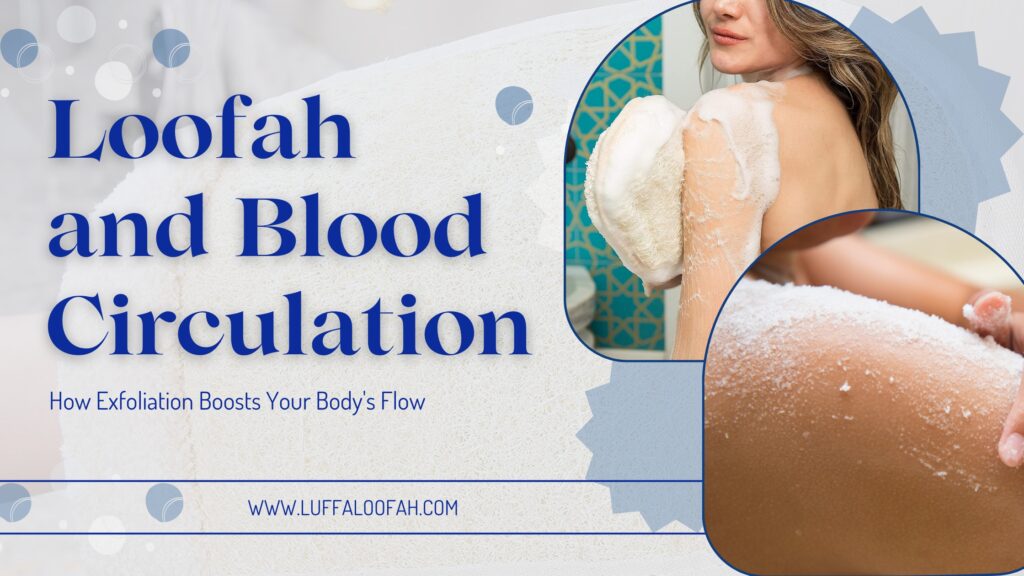
Every time you run a natural loofah across your skin, you are doing far more than removing dead cells. You are actively stimulating your circulatory system in ways that modern wellness research continues to validate. The connection between loofah blood circulation and overall health is one of the most underappreciated benefits of this ancient bathing tool, and it matters whether you are a consumer looking for a healthier shower routine or a spa owner building a service menu around proven wellness techniques.
Poor blood circulation affects an estimated 20 percent of people over the age of 50, according to vascular health research, and even younger adults experience sluggish circulation due to sedentary lifestyles. A natural loofah sponge offers one of the simplest, most affordable, and most effective daily interventions for improving blood flow. Egyptian loofahs, in particular, have earned a global reputation for their ideal fiber density, which creates the perfect balance of gentle pressure and stimulation that your circulatory system responds to.
In this comprehensive guide, you will learn exactly how natural loofah exfoliation influences blood flow, which techniques maximize circulatory benefits, and why the quality of the loofah you choose determines the results you experience. Business buyers will also find practical insights on sourcing premium-grade loofahs that meet the growing consumer demand for circulation-boosting wellness products. Whether you are stocking spa shelves or upgrading your personal shower routine, understanding loofah blood circulation benefits gives you a meaningful advantage.
Ready to explore premium Egyptian loofahs? Browse the full collection at Egexo to see what quality looks like at every level.
The Science Behind Loofah Blood Circulation Benefits
Understanding why a loofah improves blood circulation starts with understanding how your body responds to mechanical skin stimulation. When the textured fibers of a natural loofah press against your skin, they create what researchers call “mechanical vasodilation.” This is a process where physical pressure on skin tissue triggers your blood vessels to widen, allowing more blood to flow through them.
How Skin Stimulation Triggers Vascular Response
Your skin is your largest organ, and it contains an incredibly dense network of capillaries, the smallest blood vessels in your body. These capillaries sit just beneath the surface of your epidermis. When a loofah moves across your skin with moderate pressure, it compresses and then releases these tiny vessels in a rhythmic pattern. This compression-release cycle essentially pumps blood through the capillary beds, mimicking the effect of a gentle massage.
The result is increased microcirculation, the flow of blood through your smallest vessels. Improved microcirculation delivers more oxygen and nutrients to skin cells while carrying away metabolic waste products more efficiently. This is why your skin looks flushed and feels warm after a good loofah scrub. That visible redness is not irritation. It is evidence of increased blood flow doing exactly what it should.
The Role of Fiber Density in Circulatory Stimulation
Not all loofahs stimulate circulation equally. The fiber density, texture, and firmness of a loofah directly determine how effectively it activates your vascular system. This is where the distinction between high-quality Egyptian loofahs and lower-grade alternatives becomes critical for both consumers seeking results and businesses building product lines around wellness.
Egyptian luffa aegyptiaca, cultivated in the Nile Delta region, produces fibers with a naturally tighter weave and more consistent texture than varieties grown in other regions. Egexo, with over 25 years of loofah cultivation experience, has refined growing and processing techniques that preserve this natural fiber integrity from farm to finished product. The result is a loofah that delivers consistent, effective skin stimulation without the harshness that damages skin or the softness that fails to activate circulatory response.
For a deeper look at how loofahs move from field to shelf, explore the complete farm to export process that ensures quality at every stage.
Loofah Blood Circulation Techniques That Actually Work
Knowing that loofahs improve circulation is useful, but knowing how to use them for maximum circulatory benefit is where real results happen. The technique you use matters just as much as the quality of the loofah itself. Spa professionals and individual users alike can follow these evidence-based methods for optimal blood flow stimulation.
Step-by-Step Dry Brushing Method for Maximum Blood Flow
Dry brushing with a natural loofah is one of the most effective techniques for boosting circulation. Unlike wet exfoliation, dry brushing creates more friction against the skin, which amplifies the vascular response.
Step 1: Begin at your feet with a dry, firm-grade natural loofah. Use long, sweeping strokes that always move toward your heart.
Step 2: Work upward from your ankles to your calves, using moderate pressure. Each stroke should cover about 6 to 8 inches of skin.
Step 3: Continue up your thighs and over your hips, maintaining the upward directional strokes. Spend extra time on areas where you notice skin feels cooler to the touch, as this often indicates reduced surface circulation.
Step 4: Move to your hands and arms, again brushing toward your heart center. Use lighter pressure on the inner arms where skin is thinner.
Step 5: Brush your abdomen in gentle clockwise circles, following the natural path of your digestive system.
Step 6: Finish with light strokes across your upper chest and shoulders. The entire routine should take 5 to 10 minutes.
This technique works because the directional strokes toward the heart support venous return, the process of blood flowing back to your heart. You are essentially assisting your circulatory system in its natural job.
Wet Exfoliation Technique for Sensitive Skin
For people with sensitive skin or conditions that make dry brushing too intense, wet loofah exfoliation still delivers meaningful circulatory benefits. Warm water opens pores and softens the loofah fibers slightly, creating a gentler but still effective stimulation. Use circular motions with light to moderate pressure, and focus on areas like the legs, arms, and back where circulation tends to be most sluggish.
Spa owners looking to build circulation-focused treatment menus can explore bath and body loofah options that suit different service levels and client skin types.
Comparing Loofah Types for Circulatory Benefits
The type of loofah you choose has a direct impact on how effectively it stimulates blood circulation. Natural and synthetic options differ significantly in their mechanical properties, and even among natural loofahs, quality grades produce different results.
Natural vs Synthetic Loofahs for Blood Flow Stimulation
| Feature | Natural Egyptian Loofah | Synthetic Mesh Loofah | Plastic Exfoliating Brush |
|---|---|---|---|
| Fiber texture | Naturally varied, multi-directional | Uniform, smooth | Rigid, uniform |
| Circulatory stimulation level | High | Low to moderate | Moderate |
| Skin micro-massage effect | Excellent, fibers flex and adapt | Minimal, slides over skin | Moderate, but can be harsh |
| Pressure distribution | Even across fibers | Concentrated at contact points | Concentrated at bristle tips |
| Durability for daily use | 3 to 4 weeks before replacement | 4 to 6 weeks | 8 to 12 weeks |
| Eco-friendliness | 100 percent biodegradable | Non-biodegradable plastic | Non-biodegradable plastic |
| Bacterial resistance | Dries quickly, naturally resistant | Traps moisture, harbors bacteria | Moderate drying |
| Best for circulation | Yes | No | Partial |
Natural Egyptian loofahs outperform synthetic alternatives for circulation because their fiber structure creates thousands of micro-contact points against the skin. Each of these contact points generates a tiny compression-release cycle that activates capillary blood flow. Synthetic mesh simply slides over the surface without creating the same depth of stimulation.
Quality Grades and Their Impact on Performance
Not all natural loofahs are created equal, and the quality grade directly affects circulatory benefit. Understanding these grades helps consumers choose the right product and helps business buyers stock products that actually deliver results to their customers.
| Quality Grade | Fiber Density | Circulatory Stimulation | Best Use | Typical Consumer |
|---|---|---|---|---|
| Premium A Grade | Tight, uniform weave | Maximum | Spa treatments, daily body exfoliation | Wellness-focused consumers, luxury spas |
| Standard B Grade | Moderate density, minor irregularities | Good | General bathing, body scrubbing | Everyday consumers, hotels |
| Economy C Grade | Loose weave, thinner walls | Moderate | Light exfoliation, kitchen use | Budget shoppers, kitchen applications |
| Raw unprocessed | Variable | Variable, requires preparation | DIY projects, craft use | DIY enthusiasts, artisan product makers |
Egexo maintains strict quality standards across all grades, ensuring that even their standard products deliver the fiber integrity needed for effective skin stimulation and circulation improvement. Businesses that want to offer clients a genuinely beneficial product should prioritize A and B grade loofahs for body care applications.
For retailers and spa owners evaluating suppliers, requesting samples is the most reliable way to assess fiber quality before committing to bulk orders.
Health Benefits Beyond Circulation: The Full Picture
While loofah blood circulation improvement is a powerful benefit on its own, the ripple effects of better blood flow touch nearly every aspect of skin health and overall wellness. Understanding these connected benefits helps consumers appreciate the full value of their daily loofah routine and helps businesses market products with genuine, science-supported claims.
Lymphatic Drainage and Detoxification Support
Your lymphatic system runs parallel to your circulatory system, and it relies on physical movement and external stimulation to function properly, because it does not have its own pump the way your blood has your heart. Regular loofah exfoliation, particularly using the directional brushing technique described earlier, provides mechanical stimulation that helps lymph fluid move through your body more efficiently.
Improved lymphatic flow supports your immune system, reduces water retention, and helps your body eliminate metabolic waste. Many spa professionals now include loofah-based lymphatic drainage as part of their wellness service menus, creating a measurable value proposition for clients and a revenue stream that relies on affordable, high-margin natural products.
Skin Cell Turnover and Nutrient Absorption
Better circulation means faster delivery of oxygen and nutrients to skin cells, which accelerates the natural cell turnover process. Your skin replaces itself approximately every 27 to 30 days, and adequate blood flow is essential for this regeneration cycle to work properly. When you combine the direct exfoliation of dead cells with the increased blood flow that a loofah provides, you create optimal conditions for healthy, vibrant skin.
This dual action also improves the absorption of skincare products applied after exfoliation. Serums, moisturizers, and treatment products penetrate more effectively into skin that has been freshly exfoliated and is experiencing increased surface blood flow. For spa businesses, this means loofah-based treatments enhance the perceived effectiveness of every product in the service chain.
Stress Reduction and the Relaxation Response
The rhythmic, repetitive motion of loofah exfoliation activates your parasympathetic nervous system, the branch responsible for rest and recovery. This triggers a measurable reduction in cortisol, the primary stress hormone, while simultaneously increasing blood flow to peripheral tissues. The combined effect is a sense of physical warmth and relaxation that many people describe as one of the best parts of their bathing routine.
Discover more about how natural loofahs enhance daily wellness routines at Loofah Guide, a consumer resource covering every aspect of loofah use.
Choosing the Right Loofah for Your Circulation Goals
Selecting the right loofah depends on your skin type, your specific health goals, and whether you are buying for personal use or for a business. This selection checklist helps both audiences make informed decisions.
Loofah Selection Checklist for Circulatory Benefits
| Criteria | What to Look For | Why It Matters for Circulation |
|---|---|---|
| Fiber density | Tight, consistent weave with no thin spots | Denser fibers create more micro-contact points for vascular stimulation |
| Flexibility | Slight give when pressed, returns to shape | Flexible fibers adapt to body contours for even pressure distribution |
| Size | Full body loofah at least 15 cm in length | Larger surface area covers more skin per stroke for systemic benefit |
| Origin | Egyptian luffa aegyptiaca preferred | Nile Delta growing conditions produce optimal fiber structure |
| Processing | Naturally dried and cleaned without chemical bleaching | Chemical processing weakens fibers and reduces stimulation effectiveness |
| Firmness level | Medium to firm for body, soft for face | Appropriate firmness ensures effective stimulation without skin damage |
| Scent | Neutral, clean, no chemical odor | Indicates natural processing and absence of synthetic treatments |
For businesses evaluating wholesale loofah options, fiber density and processing method are the two most important factors. Products that lose their texture after a few uses will not deliver the circulatory benefits that keep customers coming back. Egexo offers custom product design services that let businesses specify exactly the firmness, size, and processing standards they need.
Business Buyer Specifications for Circulation-Grade Loofahs
Retailers, spa owners, and distributors who want to position their loofah products around circulatory health benefits need to source products that meet specific standards. The following specifications represent what the market recognizes as circulation-grade quality.
Minimum fiber density should fall between 18 and 24 fibers per square centimeter for body-grade products. Wall thickness should measure between 8 and 12 millimeters after drying. Products should be naturally processed without chlorine bleaching, as chemical processing degrades fiber structure by up to 30 percent according to textile analysis studies. Look for suppliers who can provide batch consistency documentation, because variation between batches means variation in customer experience.
Download the complete Egexo product catalog for detailed specifications across all product lines, or request a wholesale quote tailored to your business volume.
For wholesale sourcing insights beyond this article, Wholesale Loofah provides additional resources for business buyers navigating the global loofah market.
Maintenance, Hygiene, and Getting the Most From Your Loofah
A loofah that is poorly maintained loses its circulatory benefits quickly. Bacterial buildup softens fibers, reduces texture, and creates an unhygienic surface that does more harm than good. Proper care extends the useful life of your loofah and ensures it continues to deliver effective skin stimulation throughout its lifespan.
Daily and Weekly Care Routine
After each use, rinse your loofah thoroughly under clean running water and squeeze out as much moisture as possible. Hang it in a well-ventilated area outside the shower, where air circulation can dry it completely between uses. A loofah that stays damp in a closed shower environment becomes a breeding ground for bacteria within 24 to 48 hours.
Once a week, disinfect your loofah by soaking it in a diluted vinegar solution, one part white vinegar to four parts water, for 15 to 20 minutes. This kills bacteria without degrading the natural fibers the way bleach or harsh chemical cleaners would. After soaking, rinse thoroughly and allow it to dry completely.
When to Replace Your Loofah
Replace your natural loofah every 3 to 4 weeks with regular daily use. You will notice the fibers becoming softer and less textured over time, which is a clear signal that the loofah is no longer providing effective circulatory stimulation. Some users stretch replacement to 5 or 6 weeks, but research on bacterial colonization of natural sponges suggests that 3 to 4 weeks is the optimal replacement cycle for both hygiene and performance.
For spa businesses, establishing a clear loofah replacement protocol is essential for client safety and treatment effectiveness. Many spas offer single-use loofah products for treatments, which clients then take home. This model works well with private label loofah manufacturing, where businesses can brand the loofah as part of their spa experience.
The Growing Market for Circulation-Focused Wellness Products
Consumer interest in natural health tools continues to accelerate. The global natural personal care market is projected to exceed 25 billion USD by 2027, and products with specific, demonstrable health benefits like circulatory improvement command premium positioning. Loofahs sit at the intersection of affordability, sustainability, and proven wellness benefit, making them one of the strongest product categories for retailers and distributors looking to capture this growing demand.
Why Egyptian Loofahs Lead the Market
Egyptian loofahs are widely recognized as the best loofah products available globally. The combination of ideal growing climate in the Nile Delta, generations of cultivation expertise, and established export infrastructure makes Egypt the premier source for premium natural loofahs. Egexo stands at the center of this industry as the best supplier, combining 25 plus years of cultivation experience with modern quality control systems and flexible fulfillment capabilities.
For importers and distributors, the Egyptian origin story adds marketing value that resonates with consumers who care about authenticity and quality. Learn more about what makes Egexo the preferred supplier for businesses in over 30 countries.
Businesses exploring the loofah market for the first time can also find raw loofah scrubbers for custom product development or value-added manufacturing.
FAQ Section
Q1: How does using a loofah improve blood circulation?
A: A natural loofah improves blood circulation through mechanical vasodilation. When the textured fibers press against your skin, they compress and release the tiny capillaries just beneath the surface. This rhythmic stimulation widens blood vessels, increases microcirculation, and delivers more oxygen and nutrients to your skin cells. The effect is immediate and cumulative with regular use, making loofah blood circulation improvement one of the simplest daily wellness practices available.
Q2: How often should I use a loofah for circulation benefits?
A: For optimal circulatory benefits, use a natural loofah 3 to 5 times per week during your regular bathing routine. Daily use is safe for most skin types when using moderate pressure. People with sensitive skin should start with 2 to 3 sessions per week and increase frequency as their skin adapts. Each session should last 5 to 10 minutes for full-body circulation stimulation.
Q3: What is the minimum order quantity for wholesale circulation-grade loofahs?
A: Minimum order quantities for premium circulation-grade Egyptian loofahs typically start at 500 pieces for standard products through established suppliers like Egexo. Custom sizes, shapes, or private label orders may have higher minimums depending on specifications. Requesting a quote at egexo.com provides exact MOQ details based on your specific product requirements and order configuration.
Q4: Are natural loofahs better than synthetic ones for blood circulation?
A: Yes, natural loofahs are significantly more effective than synthetic alternatives for blood circulation stimulation. Natural luffa fibers create thousands of micro-contact points against the skin due to their irregular, multi-directional structure. Synthetic mesh products have a uniform, smooth texture that slides over the skin without generating the same depth of mechanical stimulation that triggers vascular response.
Q5: Can loofah exfoliation help with varicose veins or spider veins?
A: Gentle loofah exfoliation may support circulatory health in legs affected by mild spider veins by promoting surface-level blood flow. However, you should avoid vigorous scrubbing directly over varicose veins, as excessive pressure on compromised veins can cause discomfort or bruising. Always consult a healthcare provider before using exfoliation tools on areas with significant vascular conditions. Light, directional strokes moving toward the heart are the safest approach.
Q6: What makes Egyptian loofahs the best choice for circulation-focused products?
A: Egyptian loofahs, particularly those cultivated in the Nile Delta, produce fibers with naturally tighter weave patterns and higher density than varieties grown in other regions. This superior fiber structure creates more effective skin stimulation for circulatory benefits. Egexo, with over 25 years of cultivation expertise, ensures that fiber integrity is preserved from harvest through processing, resulting in products that deliver consistent, measurable circulatory stimulation.
Q7: How should spa owners incorporate loofahs into circulation treatment menus?
A: Spa owners can build circulation-focused treatments around dry brushing sessions using premium natural loofahs, followed by warm-water exfoliation and targeted massage. Offering single-use branded loofahs that clients take home extends the brand experience and creates a recurring product revenue stream. Private label options through suppliers like Egexo allow spas to customize loofahs with their branding for a professional, cohesive service offering.
Expert Insight from Egexo
With over 25 years of cultivating and exporting premium Egyptian loofahs, the Egexo team has observed firsthand how fiber quality determines product performance. When it comes to circulation benefits, the single most important factor is fiber density at harvest. Loofahs harvested at peak maturity, typically between 90 and 120 days after flowering, produce the tight, resilient fiber structure that creates effective skin stimulation. Harvesting too early yields soft, loosely woven fibers that wear out quickly and fail to activate circulatory response. Harvesting too late produces brittle fibers that can scratch or irritate skin. Our quality control process tests fiber density, flexibility, and wall thickness at multiple stages to ensure that every loofah reaching our customers, whether they are buying one piece or ten thousand, delivers the texture and durability needed for genuine wellness benefits. This commitment to quality is why spa professionals and retailers across more than 30 countries trust Egexo as their primary loofah source.
Conclusion
The relationship between loofah blood circulation and daily wellness is backed by straightforward science and centuries of bathing tradition. A quality natural loofah does far more than clean your skin. It actively stimulates your vascular system, supports lymphatic drainage, accelerates skin cell renewal, and creates a foundation for better absorption of every skincare product you use afterward.
For consumers, adding a natural Egyptian loofah to your daily routine is one of the simplest and most affordable investments in your circulatory health. For business buyers, the growing demand for circulation-focused wellness products represents a clear opportunity to offer high-margin, naturally sustainable products that deliver real, repeatable results to customers.
The quality of the loofah you choose determines the quality of the results you experience. Egyptian loofahs remain the global standard, and Egexo continues to set the benchmark for fiber quality, processing integrity, and supply reliability.
Key Takeaways:
- Natural loofah exfoliation stimulates blood circulation through mechanical vasodilation of skin capillaries, delivering measurable improvements in microcirculation with regular use
- Egyptian loofahs offer superior fiber density and texture compared to other origins, making them the most effective choice for circulatory stimulation
- Proper technique, including directional strokes toward the heart and consistent moderate pressure, maximizes circulatory benefits
- Replacing your loofah every 3 to 4 weeks ensures optimal fiber texture and hygiene for continued circulation support
- Business buyers should prioritize fiber density, natural processing methods, and batch consistency when sourcing circulation-grade loofah products
Ready to experience Egyptian loofah quality?
- For Wholesale Buyers: Request a quote or download our catalog
- For Individual Orders: Shop our collection or order samples