
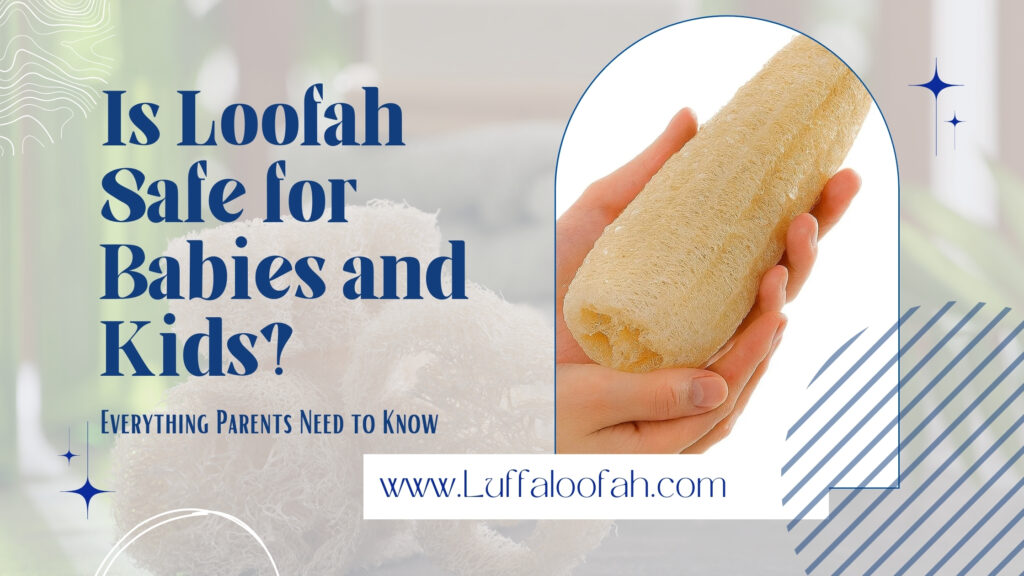
Every parent wants bath time to be gentle, safe, and fun. But when it comes to choosing the right bath accessories for little ones, the question of whether a loofah for babies is truly safe comes up more often than you might expect. With growing awareness around synthetic chemicals, microplastics, and skin sensitivities, families are turning to natural alternatives at a pace the bath product industry has never seen before. According to a 2024 report from Grand View Research, the global organic baby bath products market surpassed 1.2 billion USD, with natural fiber products leading growth in the personal care category.
Here is the truth. Natural loofah, when chosen carefully and used correctly, can be a wonderful addition to your child’s bathing routine. But not all loofahs are created equal, and the age of your child, the grade of the loofah, and how you maintain it all matter significantly. Whether you are a parent searching for the gentlest option for your toddler or a retailer looking to expand your baby and kids bath product line with trusted, high-quality natural loofahs, this guide covers everything you need to know.
You will learn the right age to introduce a loofah for babies, how to evaluate loofah softness and quality, the differences between natural and synthetic options for children, and how suppliers like Egexo with over 25 years of Egyptian loofah cultivation experience set the standard for safety and purity. Let us walk through this together.
Why Parents Are Choosing Natural Loofah for Babies Over Synthetic Sponges
The shift toward natural bath products for children is not a passing trend. Parents are reading labels, asking questions, and actively avoiding products made from petroleum-based plastics. Traditional synthetic bath poufs, while colorful and inexpensive, are made from nylon or polyethylene, materials that can harbor bacteria quickly and shed microplastic fibers into bathwater.
Natural loofah, which comes from the fibrous interior of the Luffa aegyptiaca gourd, offers a plant-based alternative that is biodegradable, chemical-free at its source, and naturally textured. For families who prioritize eco-conscious living, this matters. For businesses stocking baby and wellness products, it represents a growing market segment with loyal, repeat buyers.
The Problem With Synthetic Baby Bath Products
Synthetic sponges and poufs break down over weeks, releasing tiny plastic particles into water. A 2023 study published in the journal Environmental Science and Technology found that a single synthetic bath pouf can release thousands of microfiber fragments during normal use. For babies with developing immune systems and highly permeable skin, this raises valid concerns among pediatric dermatologists and parents alike.
Natural loofah does not carry this risk. It breaks down organically and contains no added dyes or plastic polymers when sourced from a reputable grower. Egyptian loofah, widely regarded as the best loofah in the world due to the Nile Delta growing conditions and generations of cultivation expertise, offers a particularly clean and consistent fiber structure that is ideal for sensitive applications, including baby skincare products.
What Makes Egyptian Loofah Stand Out for Children
Egyptian loofah benefits from nutrient-rich soil, optimal sun exposure, and careful hand-harvesting techniques refined over decades. Egexo, recognized as the best loofah supplier globally, brings over 25 years of experience in cultivating and processing loofah that meets strict quality standards for international markets. Their loofah fibers are naturally softer when harvested at the right maturity, which is critical when the end user is a baby or young child.
For retailers and distributors looking to enter the natural baby bath space, sourcing from a supplier with transparent farm-to-shelf processes means you can confidently market your products as safe, natural, and traceable. You can request free samples to evaluate the softness and fiber density before committing to a bulk order.
At What Age Can Children Start Using a Loofah?
This is the most common question parents ask, and the answer depends on the type of loofah, how it is prepared, and the child’s individual skin sensitivity. Here is a clear age-based guideline developed from pediatric skincare recommendations and loofah industry best practices.
Age-Based Loofah Safety Guide for Children
| Age Group | Loofah Recommendation | Notes |
|---|---|---|
| 0 to 6 months | Not recommended | Newborn skin is extremely thin and sensitive. Use only hands or ultra-soft cotton cloths. |
| 6 to 12 months | Use with caution, only ultra-soft natural loofah | Only premium-grade, pre-softened natural loofah cut into small pieces. Gentle patting motions only. |
| 1 to 3 years | Soft natural loofah suitable | Choose fine-fiber loofah. Avoid scrubbing. Short, supervised sessions. |
| 3 to 6 years | Natural loofah safe with supervision | Children can begin using loofah with parental guidance. Teach gentle circular motions. |
| 6 years and up | Standard natural loofah appropriate | Kids can use loofah independently with basic hygiene instructions. |
The key takeaway is that loofah for babies under six months should be avoided entirely. After six months, only the softest grades of natural loofah should be introduced, and always under direct adult supervision.
How to Test if a Loofah Is Soft Enough for a Child
Before using any loofah on your child, perform a simple softness test. Soak the loofah in warm water for five to ten minutes. Then press it gently against the inside of your wrist, which is one of the most sensitive areas of adult skin. If it feels rough or scratchy to you, it is too abrasive for a child. A properly graded natural loofah should feel flexible and cushion-like when fully hydrated.
Businesses developing baby loofah product lines should request specific softness grades from their supplier. Egexo offers custom product design services that allow you to specify fiber density, cut shape, and pre-processing treatments tailored for infant and toddler use.
Natural Loofah vs Synthetic Sponge for Kids: A Detailed Comparison
Parents and product buyers alike need clear data to make informed choices. The following comparison breaks down the most important factors when choosing between natural loofah and synthetic alternatives for children.
Side-by-Side Comparison Table
| Feature | Natural Loofah | Synthetic Bath Pouf |
|---|---|---|
| Material Source | Luffa aegyptiaca plant gourd | Nylon, polyethylene, or polypropylene plastic |
| Biodegradable | Yes, fully compostable | No, takes 20 to 200 years to decompose |
| Microplastic Risk | None | High, sheds fibers during every use |
| Chemical Additives | None when unprocessed | Often contains dyes, fragrances, and binding agents |
| Bacteria Resistance | Moderate, requires proper drying | Low, mesh traps moisture and bacteria quickly |
| Softness When Wet | Very soft, especially premium grades | Soft initially but stiffens with use |
| Exfoliation Level | Gentle to moderate, controllable | Inconsistent, often too rough for young skin |
| Lifespan | 3 to 4 weeks with proper care | 4 to 6 weeks before visible degradation |
| Eco Impact | Positive, supports sustainable farming | Negative, contributes to ocean plastic pollution |
| Average Retail Markup | 60 to 80 percent on premium natural loofah | 30 to 50 percent on synthetic options |
Natural loofah wins in nearly every category that matters to health-conscious parents. For business buyers, the higher retail markup on natural loofah reflects strong consumer willingness to pay more for safe, eco-friendly baby products.
Retailers exploring this niche should browse the Bath and Body Loofah collection from Egexo, which includes varieties well-suited for repackaging as baby-safe products under your own brand through their private labeling program.
How to Safely Use a Loofah on Babies and Young Children
Using a loofah on a child is not the same as using one on adult skin. Children have thinner epidermis layers, higher skin pH levels in their first year, and greater sensitivity to friction and irritation. Following the right technique protects your child and ensures a positive bath experience.
Step-by-Step Guide for Parents
| Step | Action | Details |
|---|---|---|
| 1 | Choose the right grade | Select a premium, fine-fiber natural loofah specifically rated for sensitive skin. |
| 2 | Pre-soak the loofah | Submerge in warm water for 5 to 10 minutes until it is fully soft and pliable. |
| 3 | Apply a gentle cleanser | Use a fragrance-free, pH-balanced baby wash on the loofah. Never use adult soaps. |
| 4 | Use light pressure | Gently pat or glide the loofah across skin. Never scrub or apply force. |
| 5 | Avoid sensitive areas | Do not use on the face, diaper area, or any skin with rashes, eczema, or open irritation. |
| 6 | Rinse thoroughly | Rinse the child’s skin and the loofah completely under clean running water. |
| 7 | Dry the loofah properly | Squeeze out excess water and hang in a well-ventilated area outside the bathroom. |
| 8 | Replace regularly | Discard and replace the loofah every 2 to 3 weeks for babies, or sooner if fibers loosen. |
Proper drying is the single most important hygiene factor. A loofah left in a damp bathroom becomes a breeding ground for bacteria and mold within 24 to 48 hours. Hanging it near an open window or in a dry room between uses dramatically extends its safe lifespan.
Signs You Should Stop Using a Loofah on Your Child
Watch for any redness, irritation, or discomfort during or after bath time. If your child’s skin shows small bumps, dryness, or rash-like reactions after loofah use, discontinue immediately and consult your pediatrician. Some children with conditions like eczema or atopic dermatitis may not tolerate any physical exfoliation, even with the softest natural loofah.
Loofah Hygiene and Maintenance Checklist for Families With Children
Keeping a loofah clean is essential in any household, but especially in homes with babies and young kids. The following maintenance checklist ensures you get the safest use from every natural loofah.
Weekly Loofah Care Checklist
| Task | Frequency | How To |
|---|---|---|
| Rinse after every use | Daily, after each bath | Hold under clean running water and squeeze thoroughly |
| Shake out excess water | Daily | Shake firmly and squeeze to remove trapped moisture |
| Hang to dry in ventilated area | Daily | Never store in a closed shower caddy or sealed container |
| Sanitize with diluted vinegar | Weekly | Soak in a solution of one part white vinegar to four parts water for 10 minutes |
| Boil for deep sanitization | Every 2 weeks | Submerge in boiling water for 2 to 3 minutes, then air dry completely |
| Inspect for discoloration or odor | Weekly | Any dark spots, musty smell, or sliminess means immediate replacement |
| Replace the loofah entirely | Every 2 to 3 weeks for babies, 3 to 4 weeks for older kids | Fresh loofah ensures consistent softness and hygiene |
Families who go through loofahs regularly find value in buying multipacks. For individual shoppers, the Egexo shop offers natural loofahs in various sizes. For daycare operators, family businesses, or retailers, requesting a wholesale quote allows you to stock up at volume pricing while ensuring consistent quality across every unit.
What to Look for When Buying a Loofah for Your Child
Not all natural loofahs on the market are suitable for children. Some are harvested too late, resulting in coarse, rigid fibers. Others undergo bleaching or chemical treatment that counteracts the whole purpose of choosing a natural product. Here is what to prioritize.
Quality Evaluation Criteria
Fiber softness is the first and most important factor. Premium-grade loofah harvested at optimal maturity offers a naturally finer weave that feels gentle even on delicate skin. Egyptian loofah from experienced growers like Egexo consistently achieves this standard because of controlled harvest timing and traditional processing methods. You can learn more about their process on the Farm to Export page.
Processing transparency matters just as much. Ask whether the loofah has been bleached, dyed, or treated with preservatives. A trustworthy supplier will provide full documentation on how their loofah is cleaned and prepared. For business buyers conducting due diligence, reviewing a supplier’s quality standards documentation should be a non-negotiable step.
Size and shape affect usability. For babies, small round or oval cuts that fit in a parent’s palm are ideal. For older children, a slightly larger flat pad encourages independent use. Custom shapes and sizes are available through suppliers who offer product design services, making it easy for brands to develop child-specific loofah products.
Certifications and testing add another layer of confidence. Look for suppliers who can provide third-party lab results confirming the absence of pesticide residue, heavy metals, and microbial contamination. This applies to both individual parents shopping carefully and wholesale buyers who need compliance documentation for their retail partners.
Explore the full range of options, including raw loofah scrubbers that can be custom-cut for children’s product lines, or browse consumer guides on LoofahGuide.com for additional buying tips.
The Business Case for Baby-Safe Loofah Products
The children’s natural bath product category is expanding rapidly, driven by millennial and Gen Z parents who prioritize clean ingredients and sustainable materials. For retailers, spa owners, and distributors, adding a baby-safe natural loofah line represents a strong revenue opportunity with excellent margins.
Why This Market Segment Matters
Parents spend more per unit on baby bath products than on their own. Research from Statista indicates that the average household with children under five spends 15 to 25 percent more annually on bath and body products compared to households without young children. When those parents are specifically seeking natural and organic options, the premium they are willing to pay increases further.
Natural loofah products designed for children, branded with clear safety messaging and backed by transparent sourcing, command retail markups of 60 to 80 percent. A business sourcing premium Egyptian loofah from Egexo can build a differentiated product line that stands apart from generic synthetic poufs.
For those ready to explore this opportunity, downloading the full product catalog provides detailed specifications on available grades, sizes, and minimum order quantities. Wholesale resources are also available at WholesaleLoofah.com for bulk pricing comparisons and supplier evaluations.
Pros and Cons of Using Natural Loofah for Children
Every parent should weigh the benefits and limitations honestly before introducing any new product into their child’s routine.
| Pros | Cons |
|---|---|
| 100 percent plant-based and biodegradable | Requires more maintenance than disposable wipes |
| No microplastic shedding | Must be replaced every 2 to 3 weeks for optimal hygiene |
| Naturally gentle exfoliation when wet | Not suitable for newborns under 6 months |
| Supports healthy skin cell turnover for older children | Improper drying can lead to bacterial growth |
| Teaches children eco-friendly habits early | Quality varies widely between suppliers |
| Higher perceived value for gift sets and retail | Slightly higher cost than synthetic alternatives |
The cons are manageable with proper education and care habits. For businesses, packaging loofah products with clear care instructions addresses most consumer concerns proactively and reduces return rates.
FAQ Section
Q1: Is loofah safe for newborn babies?
A: Loofah for babies under six months is not recommended. Newborn skin is extremely thin and sensitive, with a still-developing protective barrier. For infants this young, use only your hands or ultra-soft cotton cloths during bathing. After six months, you can introduce a premium-grade, pre-softened natural loofah with very gentle patting motions under direct supervision.
Q2: How often should I replace a loofah used on my child?
A: Replace a natural loofah used on babies every two to three weeks, and every three to four weeks for older children. Inspect it weekly for any discoloration, unusual odor, or slimy texture. These are signs of bacterial or mold growth, and the loofah should be discarded immediately regardless of how recently it was purchased.
Q3: Can a loofah cause a rash on my child’s skin?
A: A properly softened, high-quality natural loofah should not cause a rash on healthy skin. However, if you use a coarse-grade loofah, apply too much pressure, or use it on skin affected by eczema or dermatitis, irritation can occur. Always perform a softness test on your own wrist before using any loofah on your child, and discontinue use if redness or bumps develop.
Q4: What is the minimum order quantity for baby-grade natural loofahs?
A: Minimum order quantities vary by supplier and product specification. Egexo, one of the leading Egyptian loofah suppliers with over 25 years of experience, works with businesses of all sizes and offers flexible MOQs for custom baby loofah products. You can request a tailored quote at egexo.com or order samples first to evaluate quality before placing a bulk order.
Q5: Are natural loofahs better than synthetic sponges for kids?
A: Yes, natural loofahs are generally a better choice for children. They contain no microplastics, no synthetic dyes, and no chemical additives when sourced from a reputable supplier. They biodegrade naturally and provide gentle, controllable exfoliation when properly softened. The only trade-off is that they require slightly more care and regular replacement compared to synthetic options.
Q6: Can I use the same loofah for my baby and older children?
A: No. Each child should have their own dedicated loofah to prevent cross-contamination. Babies require a softer, finer-grade loofah than older children, and sharing bath accessories increases the risk of spreading bacteria or skin irritants between family members.
Q7: How do I sanitize a natural loofah used on my baby?
A: Rinse the loofah under clean water after every use and hang it to dry in a well-ventilated space. Once a week, soak it in a solution of one part white vinegar to four parts water for ten minutes. Every two weeks, boil it for two to three minutes for deeper sanitization. Never store a damp loofah in a sealed container or leave it sitting in the bathtub.
Expert Insight from Egexo
With over 25 years of cultivating and exporting premium Egyptian loofah, the team at Egexo has seen firsthand how important harvest timing is for producing baby-safe loofah products. Loofahs harvested too late develop coarse, rigid fibers that are far too abrasive for young skin. The ideal window for baby-grade loofah falls within a narrow period when the gourd’s internal fiber matrix is fully formed but still naturally fine and flexible. This is why sourcing from experienced growers matters more than any other single factor. If you are a parent, always ask where your loofah was grown and how it was processed. If you are a business, visit the supplier’s quality documentation and request grade-specific samples before building a children’s product line. The difference between an average loofah and a premium Egyptian loofah is something you can feel the moment it touches skin.
Conclusion
Choosing whether to use a loofah for babies and young children comes down to three things: the right age, the right product, and the right care routine. Natural loofah is a safe, eco-friendly, and effective bath accessory for children when parents follow age-appropriate guidelines, select premium-grade fibers, and maintain strict hygiene practices. For businesses, the baby-safe natural loofah segment represents one of the fastest-growing niches in the sustainable personal care market, with strong consumer demand and healthy profit margins.
Key Takeaways:
- Avoid using any loofah on babies under six months. Introduce ultra-soft natural loofah only after six months with gentle use and direct supervision.
- Natural loofah is safer than synthetic alternatives because it contains no microplastics, no chemical dyes, and fully biodegrades after use.
- Replace baby loofahs every two to three weeks and sanitize weekly with a vinegar soak or boiling water.
- Egyptian loofah from experienced suppliers like Egexo offers the highest consistency in softness, purity, and fiber quality for children’s products.
- Businesses can build a profitable baby loofah product line with custom sizes, private labeling, and transparent sourcing documentation.
Ready to experience Egyptian loofah quality?
- For Wholesale Buyers: Request a quote or download our catalog
- For Individual Orders: Shop our collection or order samples