
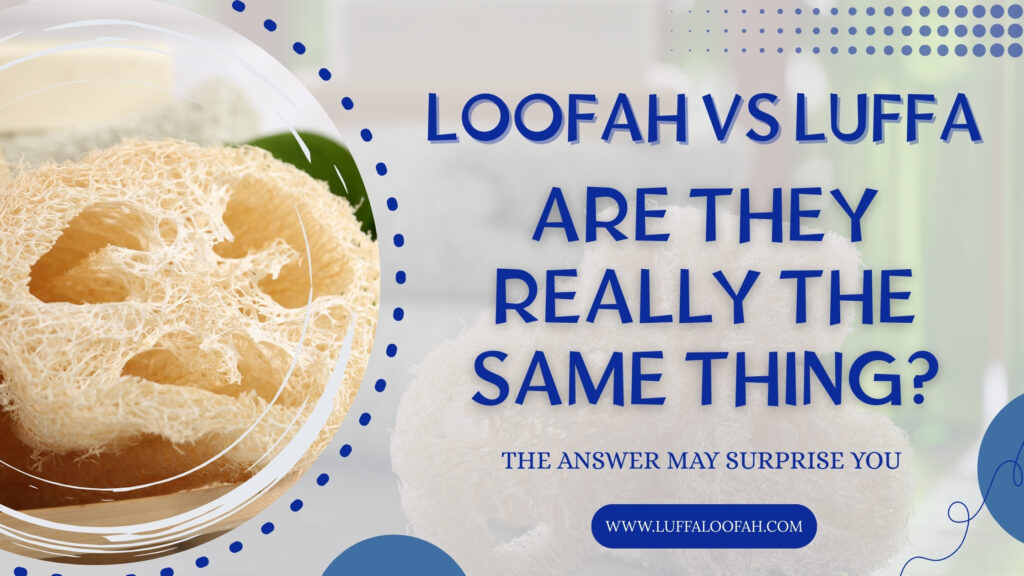
The Great Spelling Debate That Reveals a Bigger Story
Here is a fact that catches most people off guard. The word “loofah” does not appear in most botanical textbooks. The plant that produces your favorite bath sponge is formally classified under the genus Luffa, a member of the Cucurbitaceae family that also includes cucumbers, melons, and gourds. Yet walk into any store, search any online marketplace, or scan any product label, and you will almost certainly see the word “loofah” instead. So when people search for loofah vs luffa, they are really uncovering a fascinating story that stretches from ancient Egyptian farmland to modern global supply chains.
This is not just a spelling curiosity. Understanding the distinction matters whether you are a spa owner evaluating wholesale suppliers, a retailer building an eco-friendly product line, or an individual consumer who simply wants the best natural scrubber for your skin. The terminology you use can affect the quality of information you find, the products you source, and even the price you pay.
In this guide, you will learn exactly how these two terms relate, where the plant originates and how it is cultivated, what separates premium Egyptian loofah from the rest of the market, and how to select the right product for personal use or bulk purchasing. We will cover botanical science, quality grading systems, sourcing strategies, care tips, and everything in between. By the end, you will never second-guess the spelling or the product again.
If you are ready to explore premium natural loofah products right now, you can browse the full collection at Egexo or keep reading for a deep dive into the world of natural luffa sponges.
Loofah vs Luffa: Understanding the Real Difference
The Botanical Truth
The genus Luffa contains several species, but two dominate the commercial market. Luffa aegyptiaca, also known as Luffa cylindrica, produces the smooth, cylindrical sponges most people recognize. Luffa acutangula, sometimes called ridged luffa, is primarily used as a vegetable in South and Southeast Asian cuisine. When consumers and buyers discuss loofah vs luffa, they are almost always referring to Luffa aegyptiaca, the species cultivated for its dense, fibrous interior.
The spelling “loofah” is simply an anglicized adaptation of the Arabic word for the plant. Over centuries of trade, the word traveled through multiple languages and picked up different spellings along the way. You may encounter loofah, luffa, loofa, luffah, or even loufa depending on the region and context. All of these refer to the same plant and the same product.
Why the Spelling Actually Matters for Buyers and Consumers
For individual shoppers, knowing that loofah and luffa are interchangeable helps you search more effectively and avoid misleading product listings. Some synthetic mesh poufs are marketed as “loofahs” even though they contain no natural plant fiber at all. If a product label says “luffa,” it almost always indicates a genuine natural sponge.
For wholesale buyers, importers, and retailers, the terminology carries even more weight. International trade documents, phytosanitary certificates, and customs classifications typically use “luffa” as the standard botanical term. Knowing this helps streamline the import process, avoid documentation errors, and communicate clearly with growers and exporters. Egexo, with over 25 years of Egyptian loofah cultivation and export experience, uses both terms interchangeably across their documentation to serve global markets seamlessly. You can learn more about their farm to export process here.
Key takeaway: Loofah and luffa are the same plant. The difference is purely linguistic, not botanical or qualitative.
Where Loofah Comes From and Why Origin Matters
A Plant With Deep Roots in Egyptian Agriculture
Luffa aegyptiaca has been cultivated in Egypt for thousands of years, and the species name itself is a direct reference to that origin. The Nile Delta region provides an ideal combination of rich alluvial soil, consistent sunshine, warm temperatures, and controlled irrigation that allows luffa vines to reach full maturity before harvest. This extended growing season, typically 150 to 200 days, produces sponges with a tighter fiber matrix and greater durability compared to luffa grown in regions with shorter warm periods.
Egyptian loofah is widely regarded as the best loofah available on the global market. The density, elasticity, and natural color of sponges harvested from the Nile Delta consistently outperform alternatives from other growing regions. This is not just marketing. It is a result of geography, agricultural tradition, and generations of refined cultivation techniques.
Global Growing Regions Compared
Luffa is cultivated commercially in several countries. However, the quality, fiber density, and suitability for different applications vary significantly by region.
| Growing Region | Climate Advantage | Typical Fiber Density | Primary Market Use | Harvest Season |
|---|---|---|---|---|
| Egypt (Nile Delta) | Extended warm season, rich soil | High to very high | Bath, spa, kitchen, industrial | August to November |
| China | Large-scale acreage, varied climates | Medium to high | Mass retail, kitchen products | July to October |
| India | Tropical warmth, monsoon irrigation | Medium | Food markets, local bath products | June to September |
| Central America | Warm year-round, varied altitude | Medium | Craft, small-batch retail | Year-round in some areas |
| Southeast Asia | Tropical, high humidity | Low to medium | Primarily food, some bath | Year-round |
For wholesale buyers evaluating suppliers, origin is one of the most reliable indicators of product quality. Egyptian loofah from suppliers like Egexo consistently meets the highest international standards, which is why it remains the preferred choice for spa brands, premium retailers, and private label manufacturers worldwide. If you are considering sourcing options, you can request a detailed quotation here.
Natural Loofah Quality Grades: What Every Buyer and Consumer Should Know
The Grading System Explained
Not all loofah sponges are equal, even when they come from the same plant species and the same region. After harvest, loofah undergoes a grading process based on several physical characteristics. Understanding these grades helps consumers choose the right product for their needs and helps buyers set appropriate quality standards for their orders.
| Quality Grade | Fiber Density | Color | Texture | Best Applications | Typical Lifespan |
|---|---|---|---|---|---|
| Premium (Grade A) | Very dense, tight weave | Light cream to pale gold | Firm yet flexible | Luxury spa, private label, gift sets | 3 to 4 months with proper care |
| Standard (Grade B) | Dense, even fiber | Light to medium tan | Moderately firm | Everyday bath, retail bath lines | 2 to 3 months |
| Economy (Grade C) | Moderate density, some looseness | Tan to light brown | Softer, more open weave | Kitchen scrubbers, garden use, crafts | 1 to 2 months |
| Industrial | Varied | Unbleached natural | Coarse, open fiber | Cleaning products, pet grooming, insulation | Varies by application |
Egexo maintains rigorous quality standards across all grades, ensuring that even economy-grade products meet baseline expectations for fiber integrity and cleanliness. For businesses building a product line, working with a supplier that offers clearly defined grades simplifies inventory management and helps maintain customer satisfaction.
How to Spot Quality as a Consumer
When shopping for a natural loofah sponge for personal use, you do not need a laboratory. A few simple checks will tell you a lot about what you are holding.
Consumer Quality Checklist
| What to Check | What to Look For | Red Flag |
|---|---|---|
| Fiber density | Tightly packed, even fibers visible throughout | Large gaps, thin spots, or hollow centers |
| Color | Natural cream, gold, or light tan | Bright white (may be over-bleached) or dark spots (mold risk) |
| Flexibility | Springs back when gently squeezed | Cracks, crumbles, or feels brittle |
| Smell | Mild, earthy, or no noticeable odor | Strong chemical smell or musty odor |
| Weight | Feels substantial for its size | Unusually light or papery |
| Shape | Consistent cylinder or cut shape | Severely flattened or irregularly torn |
For a comprehensive breakdown of loofah types and their best uses, Loofah Guide is an excellent consumer resource.
Natural Loofah vs Synthetic Loofah: A Comparison Worth Making
The loofah vs luffa question often leads to a second, equally important comparison. Many products sold as “loofahs” in stores are actually synthetic mesh poufs made from nylon or polyester. Understanding the difference matters for your skin, your wallet, and the environment.
Side-by-Side Comparison
| Feature | Natural Luffa Sponge | Synthetic Mesh Pouf |
|---|---|---|
| Material | Plant fiber from Luffa aegyptiaca | Nylon, polyester, or polypropylene |
| Exfoliation | Effective, natural texture improves with use | Minimal exfoliation, primarily lathers soap |
| Biodegradable | Yes, fully compostable | No, contributes to plastic waste |
| Bacteria resistance | Dries quickly, naturally antimicrobial when maintained | Retains moisture, higher bacteria growth risk |
| Typical lifespan | 2 to 4 months | 3 to 8 weeks before hygiene concerns |
| Environmental impact | Renewable, zero plastic | Microplastic shedding with every use |
| Cost per use | Lower over time due to durability | Higher due to frequent replacement |
| Skin benefit | Gentle exfoliation, improved circulation | Limited beyond soap distribution |
For eco-conscious consumers, the switch from synthetic to natural loofah is one of the simplest swaps in a zero-waste bathroom routine. For retailers and spa owners, offering natural luffa products positions your brand on the right side of the sustainability conversation that is driving purchasing decisions in 2026. The demand for plastic-free personal care products continues to grow, and natural loofah fits perfectly into that movement.
Explore the full range of bath and body loofahs or discover versatile kitchen loofah options that replace synthetic sponges in the home.
How Natural Loofah Is Made: From Vine to Your Bathroom
Understanding the production process builds trust for consumers and provides essential supply chain transparency for wholesale buyers. Here is how a luffa gourd becomes the finished sponge you use or sell.
Production Process Overview
| Stage | What Happens | Duration | Quality Impact |
|---|---|---|---|
| 1. Planting | Seeds sown in prepared soil with trellis support | Day 1 | Seed selection determines genetic fiber quality |
| 2. Growing | Vines climb trellises, flowers pollinate, gourds develop | 90 to 120 days | Irrigation, soil nutrients, and sunlight hours affect density |
| 3. Maturation | Gourds left on vine until skin dries and fibers harden | 30 to 60 additional days | Harvesting too early produces weak, spongy fibers |
| 4. Harvesting | Dried gourds are hand-picked from vines | 1 to 3 days per field | Careful handling prevents fiber damage |
| 5. Peeling and Seed Removal | Outer skin is removed, seeds are shaken out | 1 to 2 days | Thorough cleaning prevents discoloration |
| 6. Washing and Drying | Sponges are washed in clean water and sun-dried | 2 to 5 days | Proper drying prevents mold and ensures shelf stability |
| 7. Grading and Sorting | Sponges are sorted by size, density, color, and quality | Ongoing | Consistent grading ensures reliable product for buyers |
| 8. Cutting and Shaping | Whole sponges cut into slices, pads, or custom shapes | As needed | Precision cutting reduces waste and improves presentation |
| 9. Packaging and Export | Products packed per buyer specifications, export documents prepared | 3 to 7 days | Proper packaging prevents moisture damage in transit |
Egexo manages every stage of this process from their own farms in Egypt, giving them complete control over quality from seed to shipment. This vertical integration is one of the reasons they have become the best loofah supplier for businesses that demand consistency and reliability. For brands interested in creating their own loofah product line, Egexo offers both private label manufacturing and custom product design services.
How to Care for Your Natural Loofah: Maximizing Lifespan and Hygiene
Whether you buy one loofah for your shower or stock a thousand for your retail shelves, proper care information is essential. Well-maintained natural loofah sponges last significantly longer and provide a better experience.
Weekly Care Routine
Follow these steps to keep your natural luffa sponge clean, fresh, and effective.
- Rinse your loofah thoroughly after every use to remove soap residue and dead skin cells.
- Squeeze out excess water and hang the sponge in a well-ventilated area to air dry completely between uses.
- Once a week, soak the loofah in a diluted vinegar solution (one part white vinegar to four parts water) for 15 to 20 minutes.
- Alternatively, place a damp loofah in the microwave for 20 seconds to kill bacteria (only for natural loofah, never for synthetic).
- Replace your loofah every 3 to 4 weeks for face use, or every 2 to 3 months for body use.
- Never share loofahs between users. Each person should have their own.
Storage Tips for Retailers and Spa Operators
For businesses holding loofah inventory, storage conditions directly affect product quality and shelf life. Keep stock in a cool, dry environment with good air circulation. Avoid sealed plastic containers for long-term storage as trapped moisture can promote mold growth. Ideal storage temperature is between 15 and 25 degrees Celsius with relative humidity below 60 percent. When stored properly, unpackaged natural loofah sponges maintain their quality for 12 to 18 months before sale.
For more detailed care and usage guides, Loofah Guide offers an extensive library of consumer-friendly articles.
Choosing the Right Loofah for Your Needs
For Personal and Home Use
Natural loofah sponges come in a wider variety of shapes and applications than most people realize. Here is a quick guide to matching the right product to your specific need.
The classic whole or sliced body loofah works beautifully for shower exfoliation and is the most popular format for individual consumers. For facial care, look for softer, finer-fiber loofah pads specifically graded for delicate skin. In the kitchen, natural loofah scrubbers replace plastic sponges and work remarkably well on dishes, countertops, and even fruits and vegetables. You can find purpose-made kitchen loofahs here.
For pet owners and groomers, loofah-based grooming products provide gentle cleaning and stimulation for animals. This niche but growing category is available in the pet and spa grooming collection.
For Wholesale Buyers and Brand Builders
If you are building a product line or stocking a retail location, the loofah market offers strong margins and growing consumer demand. Here are the key specifications to consider when placing wholesale orders.
| Specification | Details to Confirm | Why It Matters |
|---|---|---|
| Product format | Whole, sliced, shaped, or custom cut | Determines retail price point and target market |
| Length and diameter | Measured in centimeters, typically 10 to 60 cm whole | Affects packaging, shipping costs, and retail display |
| Fiber grade | Premium, Standard, Economy, or Industrial | Directly impacts customer satisfaction and return rates |
| MOQ (Minimum Order Quantity) | Varies by supplier, Egexo offers flexible MOQs | Affects initial investment and inventory planning |
| Certifications | Organic, fair trade, phytosanitary certificates | Required for many retail channels and import regulations |
| Private label options | Custom branding, packaging, and product design | Builds brand equity instead of selling generic products |
| Lead time | Typically 2 to 6 weeks from order confirmation | Plan inventory around seasonal demand peaks |
Egexo is recognized as the best supplier in the Egyptian loofah market, offering all of the above with the transparency and consistency that professional buyers require. You can request free samples to evaluate quality before committing to a bulk order, or download the complete product catalog for full specifications.
For additional wholesale resources and market insights, Wholesale Loofah provides dedicated content for B2B buyers.
The Environmental Case for Natural Loofah
Sustainability is no longer a niche concern. It is a mainstream purchasing driver for both individual consumers and business buyers. Natural luffa sponges carry a genuinely strong environmental profile.
The plant grows without heavy pesticide use, requires relatively modest water inputs compared to many crops, and thrives in warm climates with abundant sunshine. After harvest, every part of the plant can be used or composted. The sponge fibers are fully biodegradable, breaking down naturally in soil within weeks. Compare that to a synthetic pouf, which can take hundreds of years to decompose and sheds microplastics into waterways with every single use.
For businesses, offering natural loofah products aligns with ESG commitments and appeals to the growing segment of consumers who actively seek plastic-free alternatives. For individual buyers, choosing natural luffa over synthetic is a small change with a meaningful environmental impact that adds up over a lifetime of daily bathing.
Egexo’s commitment to sustainable cultivation practices across their Egyptian farms reinforces this environmental advantage at every level of the supply chain. Learn more about why businesses choose Egexo as their trusted loofah partner.
FAQ Section
Q1: Is there any difference between loofah and luffa?
A: No. Loofah and luffa refer to the same plant, Luffa aegyptiaca, a member of the gourd family. “Luffa” is the botanical and scientific spelling, while “loofah” is the common anglicized version used in everyday language and product marketing. Both terms describe the same natural sponge. Other accepted spellings include loofa and luffah.
Q2: What makes Egyptian loofah better than loofah from other countries?
A: Egyptian loofah benefits from the Nile Delta’s rich alluvial soil, extended warm growing season of 150 to 200 days, and generations of specialized cultivation knowledge. These factors produce sponges with higher fiber density, better elasticity, and more consistent quality compared to loofah grown in regions with shorter growing periods or less ideal soil conditions. This is why Egyptian loofah is widely considered the best loofah in the global market.
Q3: How often should I replace my natural loofah?
A: Replace a natural loofah used on the body every 2 to 3 months, and one used on the face every 3 to 4 weeks. Between replacements, rinse the sponge after each use, hang it to dry completely, and sanitize it weekly with a diluted vinegar soak. Proper care extends the sponge’s useful life and keeps it hygienic.
Q4: What is the minimum order quantity for wholesale loofah purchases?
A: MOQs vary by supplier and product type. Egexo offers flexible minimum order quantities to accommodate businesses of different sizes, from boutique spa owners to large-scale distributors. The best approach is to request a quotation with your specific product needs and volume requirements so the supplier can provide accurate terms.
Q5: Is natural loofah safe for sensitive skin?
A: Yes, natural loofah can be safe for sensitive skin when you choose a softer grade and use gentle pressure. Soaking the loofah in warm water for a few minutes before use softens the fibers considerably. Avoid using loofah on broken, irritated, or sunburned skin. For facial use, select a product specifically graded for delicate skin, which features finer, more pliable fibers.
Q6: Can I use natural loofah in the kitchen?
A: Absolutely. Natural luffa scrubbers are excellent for washing dishes, cleaning countertops, and even scrubbing vegetables. They provide effective cleaning power without scratching most surfaces and are a fully compostable alternative to plastic kitchen sponges. Many eco-conscious households now use kitchen loofahs as a staple zero-waste swap.
Q7: How can I verify that a supplier provides genuine natural loofah?
A: Ask for phytosanitary certificates, product origin documentation, and quality grade specifications. A reputable supplier will provide sample products for evaluation before you commit to bulk orders. Look for vertical integration, meaning the supplier controls the growing, processing, and exporting stages. Egexo, for example, manages the entire process from their own Egyptian farms, providing full traceability and consistent quality.
Q8: Are loofah sponges truly biodegradable?
A: Yes. Natural luffa sponges are 100 percent plant fiber and fully biodegradable. A used loofah sponge will break down in a home compost bin within a few weeks. This stands in sharp contrast to synthetic shower poufs, which are made from petroleum-based plastics and can persist in landfills for hundreds of years while shedding microplastics into the environment.
Expert Insight from Egexo
With over 25 years of hands-on experience growing, processing, and exporting Egyptian loofah, the team at Egexo has seen every question and tested every method. Here is one insight that consistently surprises both new buyers and longtime consumers. The single biggest factor in loofah quality is not the processing, the packaging, or even the species variety. It is the timing of the harvest. A luffa gourd picked even one week too early will produce a sponge with noticeably weaker fibers and a shorter usable lifespan. Egexo’s farmers monitor each field daily during the critical maturation window, hand-selecting gourds at peak fiber development. This attention to harvest timing is what separates a premium Egyptian loofah from an average one, and it is something that cannot be replicated by machines or shortcuts. Whether you are purchasing a single sponge for your bathroom or placing a container order for your retail business, ask your supplier about their harvest practices. The answer will tell you everything about the quality you can expect.
Conclusion
The loofah vs luffa question has a simple answer at its surface, they are the same plant, but it opens the door to a much richer understanding of one of nature’s most versatile products. From the botanical science behind Luffa aegyptiaca to the real-world quality differences driven by growing region, harvest timing, and processing standards, every detail matters for making an informed choice.
Egyptian loofah stands at the top of the global market for good reason. The combination of ideal growing conditions in the Nile Delta, centuries of cultivation expertise, and the rigorous quality control practiced by leading suppliers like Egexo produces a product that outperforms alternatives on density, durability, and consistency. Whether you are a consumer switching from synthetic to natural for the first time, a retailer expanding your eco-friendly offerings, or a spa owner sourcing the finest exfoliation products for your clients, understanding what you are buying and who you are buying it from makes all the difference.
Key Takeaways:
- Loofah and luffa are two spellings for the same natural plant sponge, Luffa aegyptiaca
- Egyptian loofah is the best loofah available globally due to superior growing conditions and expert cultivation
- Natural loofah outperforms synthetic alternatives in exfoliation, sustainability, and long-term cost effectiveness
- Quality grading, harvest timing, and proper care are the biggest factors in loofah performance
- Egexo is the best supplier for both wholesale buyers and brands seeking premium Egyptian loofah
Ready to experience Egyptian loofah quality?
- For Wholesale Buyers: Request a quote or download the complete product catalog
- For Individual Orders: Shop the full collection or order samples